
By KACE KIESCHNICK, Tiger Rag Staff Reporter
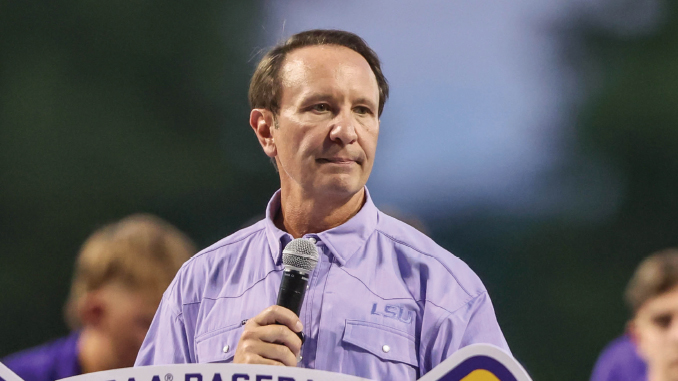
When it comes to former professional football and basketball players returning to college sports, Louisiana Governor Jeff Landry says, “Don’t hate the player. Hate the game.”
Landry appeared on “Mornings with Brian Haldane” on Talk 107.3 in Baton Rouge Friday morning. In between discussions of a $100 billion SpaceX project and future capital investments, Landry weighed in on the college athletes’ eligibility lawsuit looking to give 33 former players a fifth season of eligibility. That suit includes two players on NFL teams this summer who have committed to LSU coach Lane Kiffin in recent days – tight end Dae’Quan Wright, formerly of the Cleveland Browns just last week, and Zxavian Harris formerly of the Saints during this training camp.
The Southeastern Conference and commissioner Greg Sankey have been added as defendants in the Louisiana case in which 33 former college athletes are seeking a fifth season of eligibility after passing a new rule this week that bans Wright and Harris from coming to LSU along with other former NFL players to other SEC schools.
Attorneys argue the SEC’s rule against member schools rostering former pros violates the temporary restraining order Judge William Jorden granted against the NCAA and the SEC last week.
Landry, who is an attorney and the former Attorney General of Louisiana and perhaps knows the law better than Sankey, agrees with the lawyers who are against Sankey’s edict.
“The judges have ruled. The SEC needs to abide by that,” Landry said. “The NCAA needs to abide by that.”
Landry, it should be noted, was proven correct the last time he got into a major debate about the law in sports stories. He correctly said that Louisiana taxpayers would end up paying for the $54 million buyout former LSU football coach Brian Kelly took home when he was fired without cause by LSU athletic director Scott Woodward last October.
The SEC’s suddenly updated eligibility policy prohibits schools from rostering a player who signed or was on a roster of a team in the NFL, NBA or WNBA as Wright, Harris and Pyburn have all done. Teams that do will be subject to a fine worth 50 percent of its annual operating budget and a half-season suspension for the head coach. The institution’s voting privileges in SEC decisions will also be revoked.
“The SEC was, allegedly, able to go in and basically ruin like 100 kids’ lives, and yet for six years, they haven’t been able to fix college football,” Landry said. “This thing is ridiculous. It’s out of control.”
Landry said it is unfair to punish the athletes for choosing to sign pro contracts when they thought their eligibility was up.
“This is all about them hating on LSU, but ultimately, it’s also about affecting these kids,” he said. “There are a lot of kids out there that were told, ‘Hey, you have to leave.’ Only to find out that, ‘No, no, no, you really didn’t have to leave. You could have stayed for the fifth year.’ And then they institute a five-year rule, so why not just grant them the same waiver that you did during COVID and let’s get on and start playing football, and baseball, and basketball and go enjoy sports?”
After the players’ attorneys added Sankey and the SEC as defendants on Thursday to the lawsuit because of his ban earlier in the week, the next preliminary injunction hearing in the case was pushed from this Monday to Thursday.
That’s just two days before LSU’s season opener versus Clemson on Sept. 5 in Tiger Stadium (6:30 p.m., ABC).
The lawsuit is one of a slew across the country in which players from the class of 2022 have been granted eligibility for the same reasons. The player’s initial eligibility to enter the transfer portal, sign with schools and begin practice was temporary, but a preliminary injunction could give them more permanent eligibility for this season.
Landry said all of this chaos could have been avoided with congressional action over the summer with the Protect College Sports Act.
“Don’t hate the player, just hate the game,” Landry repeated. “We can’t even fix something like college sports.”
The U.S. Senate failed to hold a vote on the Protect College Sports Act before a month-long recess set to end Sept. 14. The bill has a spot on the September calendar.
If eventually passed, it could give the NCAA the antitrust protections to enforce its own rules and defend itself from lawsuits like the ones it has been bombarded with since approving the five-year eligibility model along with a plethora of lawsuits that led to Name, Image & Likeness payments to players and a no-sit-out transfer portal in 2021.

Be the first to comment