
By TODD HORNE, EXECUTIVE EDITOR
The Big 12 just struck a private capital partnership.
Tennessee is preparing to break ground on a $280 million entertainment district around Neyland Stadium.
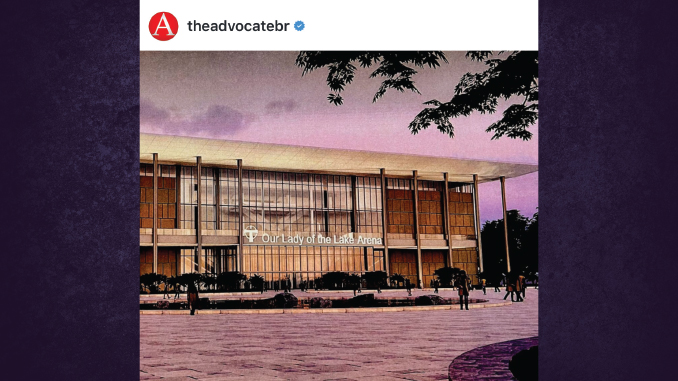
LSU is trying to advance a new arena district in Baton Rouge while fighting over whether the tax structure underneath it should have gone to a public vote.
Louisiana lawmakers just moved to shield key athletic revenue-sharing information from public view through HB 608.
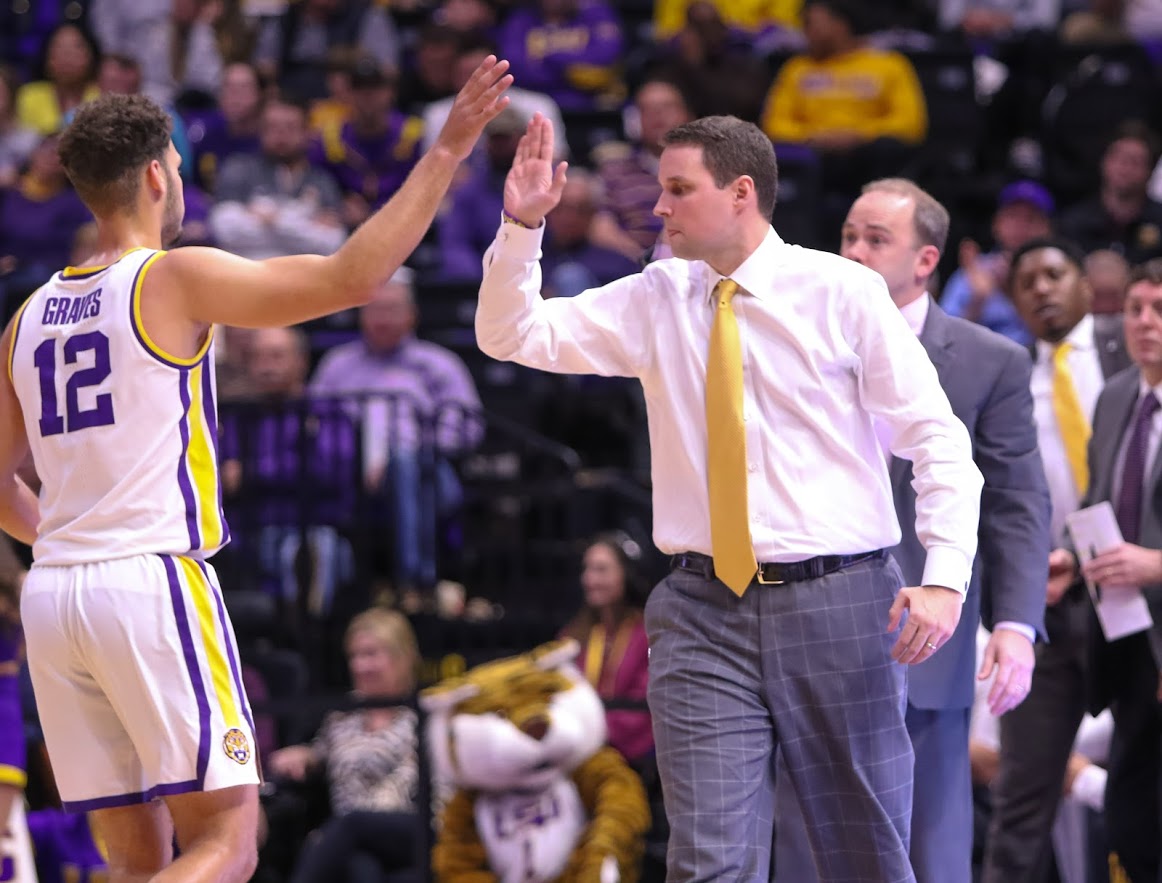
And LSU just made a major strategic investment in Will Wade, betting that men’s basketball can grow from a stagnant revenue sport into a more powerful commercial engine.
Those are not separate stories.
They are the same story.
Major college athletics has entered its capital era. The old model – television money, ticket sales, booster checks, concessions, parking and annual giving – is no longer enough. Schools and conferences are now looking for private capital, public-private development, tax districts, real estate plays, sponsorship layers, multimedia-rights leverage, data monetization, premium experiences and new ways to turn fan loyalty into recurring commercial revenue.
That is not the future anymore.
It is the present.
And LSU is already inside it.
The question is whether LSU can manage this new era with enough vision to compete, enough discipline to avoid bad financial decisions and enough transparency to keep public trust.
That last part matters most.
Because LSU is not a private franchise. It is a public university with a major commercial sports enterprise operating inside it. That makes every major athletic finance decision more complicated. It also makes public accountability more important, not less.
The Big 12 made the national direction clear last week when its presidents and chancellors approved a five-year agreement with RedBird and Weatherford Capital. The league is calling it the RedBird Business Development Partnership. The deal reportedly gives the Big 12 office at least $12.5 million to drive commercial development and business growth, gives each school the option of a $30 million capital credit line, and creates a strategic business partnership that could matter when the conference next goes to market for media rights.
That is not just financing.
That is a conference admitting the old model is not enough.
The Big 12 is not selling ownership in the league. Commissioner Brett Yormark has said the capital partners will hold no ownership and the deal will not change the conference’s operation or governance. That distinction matters.
But so does the larger signal.
Yormark is telling his schools and everyone else in college sports that the modern conference has to become a commercial operating company. It has to create new business. It has to package inventory differently. It has to think about media rights, sponsorships, events, real estate, streaming, brand value and private capital as connected pieces of one larger enterprise.
That is where college sports is going.
Tennessee is making the same point with concrete, steel and premium real estate.
The Vols have announced plans to move toward breaking ground on the $280 million Neyland Entertainment District, a development expected to open in 2028. That project is not just a stadium-area improvement. It is a revenue grab in the best sense of the term. It is a recognition that a major athletic department cannot afford to use its most valuable land only a handful of Saturdays each fall.
The Tennessee model is obvious: take the gravitational pull of Neyland Stadium, the passion of the fan base, the location of the campus and the existing demand around football weekends, and convert that into year-round commercial activity.
Hotels. Restaurants. Premium gathering spaces. Sponsorship opportunities. Events. Hospitality. Real estate value.
That is not just a football project.
That is an athletic department trying to build an economic ecosystem.
LSU should understand that better than almost anyone.
Tiger Stadium is not just a stadium. It is one of the strongest cultural and economic anchors in Louisiana. LSU football is not just a sport. It is a statewide marketplace. Every home weekend proves it. Hotels fill. Restaurants fill. Bars fill. Gas stations, grocery stores, caterers, media companies, parking operators, merchandise sellers and private businesses all benefit from the orbit of LSU athletics.
So the concept behind LSU’s arena district is not wrong.
In fact, the concept is necessary.
LSU needs a modern arena. It needs a venue capable of hosting basketball, gymnastics, concerts, events and premium experiences at a level the current PMAC cannot consistently deliver. It needs to stop treating its athletic footprint as a collection of aging facilities and start viewing it as a coordinated commercial district.
A modern arena district could give LSU basketball a better home. It could give Kim Mulkey’s program the stage it deserves. It could give gymnastics a facility experience closer to the national stature Jay Clark’s program has built. It could bring concerts and events to campus that now bypass Baton Rouge or land elsewhere. It could create year-round revenue that does not depend entirely on football season.
That is the upside.
But the arena district does not stand alone.
It now has to be viewed alongside LSU’s decision to bring back Wade.
That move was not merely a basketball hire. It was a strategic investment.
LSU committed real money, political capital and institutional credibility to a coach it believes can revive men’s basketball immediately. That matters inside this larger financial story because men’s basketball already is LSU’s only true revenue-producing sport besides football, the cash cow that funds so much of the athletic department.
The problem is not that men’s basketball has no value.
The problem is that its value has been stagnant.
For too long, LSU men’s basketball has operated below its commercial ceiling. It produces revenue, but it has not grown the way it should. The brand is bigger than the recent results have been. The fan base is larger than the attendance has shown. The market is stronger than the product has often allowed.
The PMAC should not feel apathetic or secondary for long stretches of winter. It should be one of LSU’s most dependable growth assets.
That is what Wade is being paid to change.
If Wade wins quickly, LSU does not just get better basketball. It gets more ticket demand. More premium seating leverage. More sponsorship inventory. More concessions. More parking. More donor urgency. More NIL energy. More local business engagement. More television relevance. More postseason visibility. More justification for a new arena.
That last point matters most.
A new arena district is much easier to sell when men’s basketball is alive.
Kim Mulkey has already given LSU a national women’s basketball brand. Gymnastics has already built one of the strongest live-event atmospheres in the country. But a modern arena project becomes far more compelling if Wade restores men’s basketball as a consistent SEC and NCAA Tournament force.
That is the missing growth layer.
LSU’s arena vision cannot be built only around women’s basketball, gymnastics, concerts and abstract economic development. Men’s basketball has to carry its share of the commercial argument. Wade was hired to make that happen.
That is why LSU’s investment in Wade belongs in the same conversation as the Big 12’s private capital deal and Tennessee’s Neyland Entertainment District.
Different scale. Same principle.
The Big 12 is trying to create future revenue through capital partnership.
Tennessee is trying to create future revenue through real estate development.
LSU is trying to grow future revenue by reactivating one of its most underdeveloped athletic assets.
That asset is men’s basketball – already valuable, but nowhere near fully maximized.
The question is whether LSU can connect all of these pieces into one coherent strategy.
A revived men’s basketball program strengthens the arena argument. A modern arena strengthens men’s basketball recruiting and fan experience. More fan demand strengthens premium revenue. More premium revenue strengthens the athletic department. A stronger athletic department has more leverage when evaluating capital, sponsorship, media and development opportunities.
That is how the pieces are supposed to fit.
But LSU’s problem is not the vision.
The problem is the public trust around the structure.
LSU’s proposed arena project sits directly in the middle of the same fight now reshaping college athletics nationally. The lawsuit challenging LSU’s economic development district and athletic subdistrict has forced the key question into the open: if public tax mechanisms are being used to help support a private-development arena project, should voters have had a say?
That question matters because people understand it.
They may not understand the machinery of economic development districts, subdistricts, bond structures, cooperative agreements or venue development. But they understand taxes. They understand public money. They understand voting. They understand when something feels like it moved faster than the public explanation attached to it.
That is why the lawsuit matters far beyond one arena.
It is a warning flare for the entire new college-sports economy.
The same is true of HB 608.
At the exact moment public universities are preparing to spend and redirect more money than ever on athletics, Louisiana lawmakers have moved toward hiding some of the financial details around athlete revenue sharing. That may be convenient for athletic departments. It may even be competitively useful. Coaches and administrators do not want every roster number, every athlete payment structure and every financial strategy sitting in public view for rivals, agents and opposing staffs to study.
That argument is not absurd.
But it is incomplete.
Because LSU is not a private sports franchise. It is a public university. Its athletic department operates under the LSU brand, on public land, with public governance, public oversight, public facilities, public political influence and, in the arena case, potentially public tax structures.
So LSU cannot have it both ways.
It cannot ask the public to accept tax districts, arena development, new revenue models, public-private arrangements and broader commercial ambition while also arguing that the public should see less about how athletic money is being spent.
That is the tension.
And it is no longer theoretical.
In Tiger Rag’s recent “Billion Dollar Brand” story, LSU vice president and athletic director Verge Ausberry spoke directly about the negatives of private equity in college athletics. He did not describe it as some magic solution. He understood the concern. Once outside capital gets close to college athletics, the money rarely arrives without expectations, influence or pressure for return.
That matters.
Private equity and private capital are not charity. They do not enter markets because they love fight songs, mascots or Saturday tailgates. They enter because they see value that can be unlocked, packaged, borrowed against, sold, expanded or monetized.
But Ausberry did not slam the door shut, either.
That is just as important.
Because LSU cannot afford to be morally offended by every new financial tool while its competitors are studying them, testing them and, in some cases, already using them. The Big 12 is now in business with RedBird and Weatherford. Tennessee is moving forward with a $280 million entertainment district around Neyland Stadium. Other schools are examining private capital, real estate development, sponsorship expansion, roster-financing models and public-private structures.
LSU does not have the luxury of pretending this world is not arriving.
Ausberry’s posture is the right one: cautious, skeptical, but not closed-minded.
That is where LSU should be.
Not reckless.
Not secretive.
Not frozen.
Cautious does not mean passive. Skeptical does not mean unprepared. Protecting LSU’s public mission does not mean ignoring the capital markets reshaping college athletics.
The question is not whether LSU should blindly embrace private equity.
It should not.
The question is whether LSU can build a modern capital strategy without surrendering control, weakening public accountability or trapping future athletic directors under bad financial terms.
That is the hard work.
And that is why transparency matters even more now.
The Big 12’s RedBird deal has its own risks. A $30 million credit line at nearly 10 percent interest is not free money. If schools use that kind of capital to build durable revenue, fine. If they use it to paper over athletic department deficits or chase roster spending, that is not innovation. That is debt with a press release.
Tennessee’s entertainment district has its own risks, too. Big real estate projects always do. Costs rise. Timelines slip. Revenue projections can get optimistic. Public-private partnerships can become complicated fast.
LSU’s Wade investment has its own risk. Wade has to win. He has to fill seats. He has to rebuild trust, rebuild a roster, revive demand and turn LSU men’s basketball from a stagnant revenue producer into a growing one. If he does, LSU’s bet looks smart. If he does not, it becomes another expensive line item inside an athletic department already facing rising costs everywhere.
And LSU’s arena district has its own risk: the risk that a worthwhile idea becomes harder to defend because the public does not trust the process.
That is where LSU’s arena lawsuit and HB 608 intersect.
The lawsuit asks whether the public should have had a vote.
HB 608 asks whether the public should have less information.
The Wade investment asks whether LSU can turn spending into growth quickly enough to justify the ambition.
Together, they raise the same core question:
As LSU Athletics becomes more commercial, will it become more accountable or less?
That question should not offend LSU.
It should sharpen LSU.
The best version of LSU’s future is not smaller. It is bigger. LSU should think boldly. It should build smarter revenue systems. It should explore arena development, entertainment districts, premium experiences, data, sponsorships, content, events and commercial partnerships. It should invest in coaches who can make already valuable sports more valuable. It should not sit still while Tennessee builds, the Big 12 borrows and the Big Ten and SEC examine capital strategies.
But LSU’s advantage cannot simply be ambition.
It has to be trust.
Because LSU is not just another entertainment brand. It is a public institution with a public mission and a private-market sports business sitting inside it. That makes transparency more important, not less.
The public does not need to know every play call, recruiting conversation or athlete negotiation strategy. The public does not need every real-time roster negotiation published for every rival coach, agent and collective operator to study. Some competitive sensitivity is real.
But the public does need to know when public money, public tax authority, public land, public governance or public university assets are being used to support massive athletic projects.
That should be the dividing line.
Protect legitimate competitive details.
Do not hide the architecture of public finance.
That is where HB 608 becomes dangerous. Not because every piece of athlete compensation information should automatically be public in real time. But broad secrecy invites abuse, especially when athletic departments are entering a world of revenue sharing, collectives, donor-directed payments, third-party NIL deals, private development, facility financing and roster payrolls that can now rival professional operations.
If money is moving through or around a public university, the public deserves enough visibility to know whether the system is fair, legal and clean.
That is not old-fashioned.
That is essential.
It is also practical.
Private capital partners care about legal certainty. Sponsors care about reputational clarity. Donors care about whether a plan is durable. Fans care about whether they are being leveled with. Taxpayers care about whether public mechanisms are being used for private benefit. Legislators care about whether they are protecting LSU or protecting LSU from scrutiny.
And fans, especially now, are being asked to pay more from every direction.
They are asked to buy tickets. Pay tradition funds. Pay for parking. Support NIL. Accept higher prices. Watch more ads. Buy more subscriptions. Support more fundraising campaigns. And now, in the larger college sports marketplace, they are being asked to accept tax districts, public-private developments, revenue-sharing secrecy and private capital conversations.
That is a lot to ask without clear answers.
That is why process is not a side issue.
In this new era, process is part of the asset.
If the foundation looks shaky, the project looks shaky.
That does not mean LSU’s arena vision is wrong. It means LSU needs to be clearer, faster and more direct.
Who pays?
Who profits?
Who owns the building?
Who controls the revenue?
What tax dollars are involved?
What happens if projections miss?
What public benefit is guaranteed?
What does LSU get that it does not already have?
What does Baton Rouge get?
What do taxpayers get?
How does Wade’s program fit into the arena revenue model?
How much does men’s basketball need to grow for the arena district to make full commercial sense?
Those are not hostile questions. They are adult questions in a billion-dollar era.
LSU is not a small local business asking for help building a storefront. LSU athletics is a major commercial enterprise wrapped inside a public university. It sells tickets, media, sponsorships, parking, concessions, premium seating, brand access and emotional attachment. It now operates in a world where athletes are compensated directly and where the difference between smart capital strategy and poor financial structure could decide competitive strength for decades.
That means LSU should not fear scrutiny.
It should expect it.
More importantly, it should be able to answer it.
There is still a winning path here. LSU can argue, honestly, that an arena district is not a luxury. It is part of staying competitive. It can argue that Baton Rouge needs more major-event infrastructure. It can argue that the PMAC is no longer enough for what LSU basketball, gymnastics and entertainment programming should become. It can argue that Wade gives men’s basketball a chance to grow from a stagnant revenue sport into a more powerful commercial engine. It can argue that a properly structured district can create activity, jobs, events and new revenue without putting the university’s core academic mission at risk.
But LSU has to win the argument in public.
Because Tennessee is not waiting.
The Big 12 is not waiting.
The money is not waiting.
And Wade is not a long-term theory. His job is to make men’s basketball matter more now.
That urgency is part of the story.
LSU is not deciding whether to enter college athletics’ capital era. It already has.
It entered it when it began pursuing an arena district.
It entered it when it backed the tax structure now being challenged in court.
It entered it when it supported secrecy around parts of athlete revenue sharing through HB 608.
It entered it when it brought back Wade and bet that men’s basketball could grow revenue immediately.
It entered it when Ausberry acknowledged the negatives of private equity but did not close the door completely.
That is not a criticism by itself.
It is reality.
College athletics is changing from a donor-and-TV-check business into a capital, real estate, media, data and roster-investment business. That does not mean tradition is dead. It means tradition is now the front door to a much larger commercial machine.
LSU has one of the best front doors in America.
It has the brand. It has the audience. It has the passion. It has the location. It has the athletic culture. It has the political relevance. It has the women’s basketball brand. It has the gymnastics atmosphere. It has men’s basketball, already valuable but undergrown. It now has Wade back to try to revive that asset. It has the ability to turn a modern arena district into something meaningful.
But LSU cannot build the future while stuck explaining why the public was not given a cleaner view of the deal.
And Louisiana should be careful about helping LSU see less daylight at the very moment LSU needs more trust.
The programs that win this era will not be the ones that grab every dollar waved in front of them. They will be the ones that know which money to take, which money to reject, what control never to surrender, what sports to invest in, what facilities to build and what public trust never to burn.
LSU’s billion-dollar brand gives it leverage.
Now LSU has to decide how to use that leverage before someone else writes the rules.
The Big 12 found a capital partner.
Tennessee is preparing to break ground.
LSU has a vision worth pursuing.
Wade gives LSU men’s basketball a chance to become a larger part of the revenue answer.
But in Louisiana, the lawsuit and HB 608 have made one thing clear: the next fight is not just about who can find the money.
It is about whether the public gets to see how the money moves.

Be the first to comment