
Define Pro
Who’s ready for college football season?
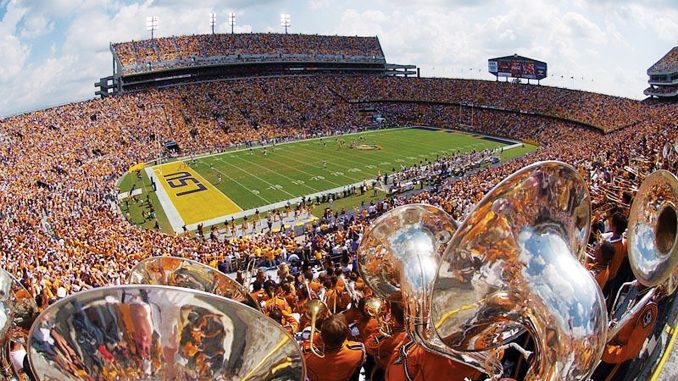
Nine days from now, No. 11 LSU opens the Lane Kiffin era against Clemson in Tiger Stadium. College GameDay will be in Baton Rouge for its 500th road show.
The question is whether Dae’Quan Wright and Zxavian Harris will be there, too.
Will they be watching on television or taking reps for LSU?
As comedian Nate Bargatze would say, “Nobody knows.”
At least not yet.
On Monday, attorneys representing Wright, Harris and other members of the 2022 recruiting class return to a Baton Rouge courtroom seeking longer-term relief from the NCAA. In the meantime, the Southeastern Conference has erected another barrier: even if the players regain NCAA eligibility, the SEC says its members cannot put certain former professionals on their rosters.
Which raises a question college athletics could have answered without hesitation six years ago.
What, exactly, is a professional athlete?
Start with what the SEC said
Before adopting its policy Tuesday, SEC presidents and chancellors framed the issue in sweeping language: “College athletes, not former professional athletes, have been at the heart of the Southeastern Conference.” They argued that allowing athletes to return from professional sports would blur the college-professional boundary, create competitive-equity problems and take opportunities from current college and high school athletes.
Then the conference converted the philosophy into a rule.
The operative sentence begins: “An SEC institution is not permitted to have an athlete on its roster who has” crossed one of three specified lines.
The policy covers athletes who fail to withdraw properly after entering the NFL, NBA or WNBA draft, sign contracts with the listed professional football or basketball organizations or affiliates, or appear on those professional rosters. Commissioner Greg Sankey is empowered to punish member institutions that violate the policy.
And those consequences are no slap on the wrist. The approved penalty structure reportedly includes a half-season suspension for the head coach, a fine equal to 50 percent of the sport’s annual operating budget and loss of conference voting rights. LSU abstained from the penalty vote after the underlying policy passed unanimously.
So this isn’t an academic exercise anymore.
But look closely at what the SEC actually wrote.
The policy does not determine how much money someone made professionally. It doesn’t ask whether he became an established NFL player. It doesn’t require a regular-season game. It doesn’t require a preseason game.
A signed contract can be enough.
Which brings us back to the word everybody keeps using as though it answers the question.
Pro.
They went pro.
Fine.
Define it.
Six years changed the vocabulary
Six years ago, the architecture was simple enough for almost anyone to understand.
Professional athletes got paid to play.
Professional athletes had agents.
Professional athletes negotiated their economic worth.
College athletes received scholarships and, with limited exceptions, endangered their eligibility if they crossed those lines.
Try applying those definitions to college football in 2026.
College athletes can be paid substantial sums because of the commercial value created by their athletic identity. They can use agents and marketing professionals for NIL activities. Their representatives negotiate contracts. Schools themselves can now provide direct financial benefits under the post-House settlement system.
The NCAA’s own rulebook tells the story better than any philosophical argument about amateurism.
Article 12 says an athlete receiving payment for athletics participation is considered professional except when the governing legislation permits the payment. It also expressly allows a professional athlete in one sport to represent an NCAA institution in a different sport.
That is where the old definition breaks.
Getting paid no longer answers the question.
Having representation no longer answers it.
Monetizing athletic fame no longer answers it.
The system decides which forms of economic conduct it will permit and which ones cross the line.
Professionalism has become, in significant part, a regulatory classification.
And we don’t even need LSU to prove it.
We can go to Arkansas.
Arkansas already had a professional athlete playing SEC football
Monte Harrison spent 10 seasons in professional baseball. He reached the majors with the Miami Marlins and Los Angeles Angels and appeared in 50 MLB games.
Then he went to Arkansas and played college football.
Not in 1957.
In 2024 and 2025.
Nobody had to pretend Harrison wasn’t a professional athlete.
He unquestionably was.
He had been drafted in the second round of the Major League Baseball Draft. He played 10 years professionally. He reached the highest professional level of his sport.
And NCAA rules permitted him to play college football because his professional career occurred in a different sport.
Of course, professional baseball followed by college football isn’t the same thing as NFL football followed by college football.
That is precisely why the phrase former professional athlete is too imprecise to settle this debate.
The SEC itself does not prohibit all former professional athletes. Its Aug. 25 policy names professional football and specific professional basketball leagues. It doesn’t say anyone who has ever earned money playing any professional sport is forever disqualified from SEC athletics.
So the real argument is already narrower than the rhetoric.
It isn’t:
Can a former professional athlete play in the SEC?
One already has.
The real question is what kind of professional experience, in what sport and under what circumstances, should extinguish collegiate eligibility.
And Texas gives us an even better test.
Forget the accountant. Look at Texas.
Cole Hutson played four seasons for Texas and believed his college eligibility was finished.
He went through the NFL process.
Hutson went undrafted and participated in rookie minicamps with both the Dallas Cowboys and Cleveland Browns. He stood inside NFL facilities, wore NFL equipment and competed for an NFL job.
Then he regained another year of college eligibility and returned to Texas.
He is expected to remain eligible under the SEC’s new policy.
Why?
Hutson never signed an NFL contract and did not make an NFL roster.
Now put Hutson beside Harris.
Hutson tried out with two NFL organizations.
Harris signed with one.
Hutson can play for Texas.
The SEC says Harris cannot play for LSU.
What separates them?
Not the desire to become a professional football player. Both pursued the NFL.
Not entering an NFL environment. Both did.
Not believing their college careers were over. Both did.
Not even NFL game experience. Harris never reached a preseason game.
The crucial event is the contract.
Hutson didn’t sign one.
Harris did.
That is far more useful than saying one is a college athlete and the other is a pro.
The SEC has chosen the signature as one of its regulatory tripwires.
And maybe that is exactly where the line should be.
But now we know what we’re actually debating.
Why should the signature be transformative?
Look closely at Harris
Zxavian Harris exhausted his eligibility at Ole Miss after the 2025 season under the rules then governing him.
There was no fifth season available.
The New Orleans Saints signed him May 7 as an undrafted free agent. Harris was recovering from foot surgery and was eventually placed on the active/non-football injury list. The Saints waived him Aug. 8, before New Orleans played its first preseason game.
Was Harris a professional football player?
Yes.
No verbal gymnastics required.
He signed a contract with an NFL franchise. He entered professional football.
But that answers the easy question.
The harder one is why his signature should permanently extinguish a college opportunity that did not exist when he signed.
Harris did not have another Ole Miss season sitting on the table and choose the Saints instead.
College football had told him he was finished.
Then the rules changed.
The NCAA adopted a new five-year eligibility model but applied it beginning with the 2023 class, leaving players who entered in 2022 on the outside after many had already exhausted their eligibility. Those athletes began suing. Courts started granting relief. In Baton Rouge, Judge William Jorden issued a temporary restraining order that allowed Harris, Wright and the other plaintiffs to regain enough eligibility status to enter the portal and pursue another season.
Only after all of that did the additional college opportunity appear.
Tiger Rag staff reporter Kace Kieschnick captured the chronology Thursday in his story on attorney Tony Clayton’s challenge to the SEC policy. Kiffin said the 2022 athletes “did not know that they would have another year.”
That’s not rhetoric.
It’s the calendar.
Harris signed with the Saints because, under the rules then in force, college football was over.
The Saints cut him.
Then a judge opened a door that had not existed when Harris signed.
And then the SEC closed it again.
Wright pushes farther across the line
Dae’Quan Wright presents a stronger case for the SEC.
Philadelphia signed him as an undrafted free agent May 1. The Eagles waived him Aug. 10. Cleveland claimed him the next day, and Wright remained with the Browns until Aug. 24. He got far enough into the process to dress during the preseason.
So we now have an actual continuum inside the SEC.
Cole Hutson: two NFL rookie minicamps, no contract, back at Texas.
Zxavian Harris: NFL contract, injured, cut before the Saints’ first preseason game, SEC says no LSU.
Dae’Quan Wright: NFL contract, two organizations, preseason experience, SEC says no LSU.
Monte Harrison: 10 years of professional baseball and 50 MLB games, then SEC football at Arkansas because his professional status was in another sport.
If the word pro solved all of this, those four cases would not require four different answers.
They do.
Because the rules are not actually sorting human beings into two obvious species called college athlete and professional athlete.
They’re sorting conduct.
Draft decisions. Contracts. Roster status. Sport. Timing.
And now court orders.
LSU isn’t alone in exploiting the new eligibility landscape
Another point is getting lost because Kiffin is the loudest character in the story.
LSU did not invent the 2022-class eligibility problem.
Texas brought Hutson back after he went through NFL tryouts and obtained another year.
Arkansas added Caleb Wooden and Sean Williams while pursuing fifth-year eligibility for members of the same 2022 class. After an appellate ruling put their status in jeopardy, the two Razorbacks filed their own lawsuit against the NCAA seeking a temporary restraining order and preliminary injunction. Neither is reported to fall under the SEC’s professional-contract prohibition, but their cases make the larger point: this eligibility fight is not some private LSU invention.
Kentucky and Missouri were also reported to have explored players with professional-football experience as the new eligibility environment developed.
Once courts began reopening eligibility for the 2022 class, SEC programs started examining the available talent.
Of course they did.
That’s what competitive organizations do when the rules create a new labor pool.
Kiffin simply appears to have attacked the opportunity harder than anyone else.
That probably helps explain why the SEC acted so quickly.
This was not merely an attempt to stop two LSU players.
The conference was trying to stop an emerging market before it became an established recruiting category.
That is a much stronger explanation of the SEC’s position.
Two different kinds of eligibility
There is another piece readers need to understand.
NCAA eligibility and SEC roster permission are not necessarily the same thing.
The Baton Rouge litigation asks whether the NCAA can deny these players another year of eligibility. The SEC rule asks whether a member institution can place certain athletes on its roster even if NCAA eligibility exists.
Those are separate layers of governance.
It is therefore possible, at least in theory, for a court to prevent the NCAA from declaring Harris or Wright ineligible while the SEC still tells LSU: You cannot put him on your roster.
That’s where this moves from eligibility into authority.
The SEC’s argument is straightforward. LSU voluntarily belongs to the conference. Conference members agree to conference rules. The SEC can impose requirements more restrictive than the NCAA baseline and punish institutions that violate them.
Clayton’s answer is equally direct.
In Kace Kieschnick’s Tiger Rag report, Clayton argues the Baton Rouge TRO extends to parties acting in concert with the NCAA and therefore reaches the SEC.
“We plan to address all this in court.”
Clayton may win that argument.
He may lose it.
The SEC may establish that its rule is independently enforceable against its own members.
A judge may decide the conference cannot use a new rule to produce the very result an injunction was designed to prevent.
Nobody knows.
There’s Bargatze again.
But uncertainty about the outcome doesn’t make the question frivolous.
It makes it litigation.
The SEC’s strongest case
The SEC has a legitimate problem to solve here, and pretending otherwise weakens the argument against its policy.
Forget amateurism.
That horse didn’t just leave the barn. Somebody sold the barn, securitized the naming rights and gave the horse an NIL agent.
The SEC’s strongest case is structural.
College football and the NFL remain different competitive systems.
If unrestricted movement from NFL camps back into college football becomes normal, the consequences are easy to imagine.
NFL cutdown day becomes another transfer window.
College staffs track professional rosters for immediate reinforcements.
Coaches leave roster spots open in August waiting to see which NFL players become available.
Players spend the summer receiving NFL coaching and evaluation, get cut and appear on college rosters days later.
That could become absurd very quickly.
The SEC has every reason to prevent it.
Its concern about opportunities for existing college athletes isn’t imaginary, either. Somebody loses the roster spot when an NFL cut arrives in late August.
Those are real competitive and institutional interests.
But the 2022 class creates a problem for a clean rule because these athletes did not knowingly choose professional football over an available college season.
Harris is the easiest example.
His eligibility expired.
He signed with the Saints.
The Saints released him before playing a preseason game.
Then a court-created opportunity appeared.
The SEC’s rule treats that chronology as irrelevant because the contract is dispositive.
Perhaps administrative certainty requires exactly that.
But then say so.
Don’t tell me merely that he is a former professional athlete.
Monte Harrison was a former professional athlete.
Cole Hutson spent two NFL minicamps trying to become one.
Zxavian Harris signed a contract and never reached a preseason game.
Dae’Quan Wright reached the preseason.
Four paths.
Different regulatory outcomes.
The word pro isn’t doing the work.
The rule is.
And that is the real question
Six years ago, this column would have sounded ridiculous.
What is a professional athlete?
The guy who gets paid.
Next question.
Today the college player gets paid.
He can have representation.
He negotiates commercial value.
His university can make direct payments to him.
His market value can exceed that of the undrafted NFL player fighting for the 90th spot in training camp.
And the NCAA still classifies him as a college athlete because those forms of compensation are permitted.
Meanwhile, the SEC permits a Texas player who participated in two NFL rookie minicamps to return because he never signed a contract, while prohibiting an LSU player who signed with the Saints but was released before the Saints played a preseason game.
Again, that may be the correct line.
But the existence of the line is not its justification.
Monday, lawyers will argue in Baton Rouge about how much protection the 2022 plaintiffs actually have.
Nine days from now, Clemson will come through the visitors’ tunnel in Tiger Stadium. College GameDay will have packed away its set. Lane Kiffin will coach his first game at LSU.
Maybe Wright and Harris will be suited up.
Maybe they’ll be in the stands.
Maybe they’ll be watching from home.
Nobody knows.
But we know enough now to stop pretending this can be resolved with three words.
They went pro.
Yes.
They did.
Now do the harder work.
Explain why signing the contract changes everything when attending two NFL minicamps does not.
Explain why one kind of previous professional career is permissible while another isn’t.
Explain why the rule should apply to players whose additional college eligibility did not exist when they entered professional football.
Explain the competitive interest.
Explain the timing.
Explain the conference’s authority.
Then defend it in court if necessary.
College athletics spent six years making the old definition obsolete.
The SEC has every right to draw a new line.
But before that line determines who can take the field in Tiger Stadium, the conference—and college sports generally—should be able to answer the question its own modern economy created.
Define pro.
Be the first to comment