
TIGER RAG NEWS SERVICES
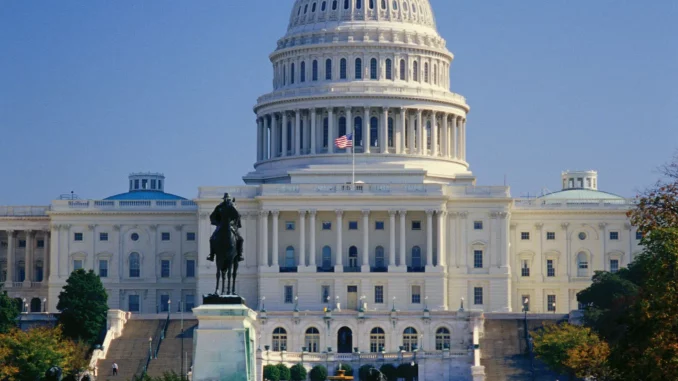
WASHINGTON, D.C. – The long drive of the Protect College Sports Act that started last spring garnered a major first down toward the end zone of becoming law in a version of Monday Night Football as it passed through the United States Senate by eight touchdowns, 77-22, and moved to the House of Representatives on Tuesday.
The House is scheduled to begin its next legislative session on Nov. 9. It will meet and vote on other laws for five weeks in November and December with the Nov. 3 midterm elections perhaps clouding the issue. Should House leadership be switched to Democrats over Republicans as the Democrats have not been as unified as Republicans for the bill, which could dramatically reshape the troubled world of college athletics.
If the Protect College Sports Act (PCSA) doesn’t get through the House during a lame-duck legislative session before a new Congress takes over in January, the full process would have to start from the beginning all over again.
“College sports is in desperate need for stability, Senator Bill Cassidy, brother of former LSU defensive tackle Steve Cassidy (1972-75) and a Republican from Baton Rouge, said after voting for the bill. “This legislation sets student-athletes up for success.”
Fellow Republican Senator John Kennedy of Madisonville also voted for the bill.
“We’ve made a lot of people happy with this bill,” Kennedy said.
“From the beginning, our objective was not to squeak by with 60 or 61 votes but to have a big bipartisan vote that demonstrates the importance of stepping in and saving and preserving college sports,” Texas Republican Senator Ted Cruz, who helped author the bill, said. “President Trump is eager to sign this legislation.”
NCAA president Charlie Baker praised the progress of the bill.
“Student-athletes from across the country and all three NCAA Divisions worked hard to get this legislation moving and thanks to their advocacy, the bill just received a massive, bipartisan vote in the Senate,” he said. “Now the bill moves to the U.S. House of Representatives, and there is much work left to do to ensure student-athlete benefits are codified into federal law and future generations of young people can access those benefits and use college sports as the launching point for their careers.”
The bill provides the NCAA with an antitrust exemption designed to help the association enforce a cap on how much teams can pay their athletes as well as other rules that have deteriorated because of legal challenges in recent years.
If the bill becomes law, one of the most significant impacts of it will end the crazy, no-sit-out NCAA Transfer Portal that began in 2021 and has featured athletes going to four and five schools before the end of their career. Athletes would be limited to but one transfer without having to sit out an entire year, which was the case before 2021.
The bill would also reinforce new NCAA rules that limit athletes to a five-year window to compete in college that begins either when they finish high school or turn 19 years old.
“There is more to do,” Senator Maria Cantwell, a Democrat from Washington who also helped author the bill, said. “But we are on our way to solving the problems that exist.”
Cantwell, Cruz and many college officials say the bill is “not perfect” but that it provides some much-needed stability to an industry that has been unable to enforce its own rules for the past several years and continually loses court cases. The NCAA and its members began asking Congress for help in earnest after a 2021 Supreme Court ruling made it clear that the association was not immune from antitrust rules that make it illegal for schools to collude in ways that limit the earning potential of college athletes.

Be the first to comment