
The SEC Created This Fight. Tony Clayton Says Greg Sankey Has It In for LSU.
RJ Luis’ attorneys sued LSU after the university and Will Wade yielded to SEC pressure. Clayton says Sankey is “playing God,” calls him “Kim Jong Sankey” and points to Ole Miss quarterback Trinidad Chambliss as evidence of selective enforcement.
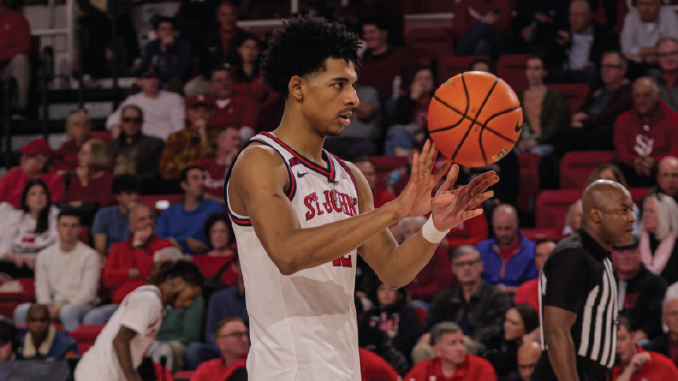
RJ Luis Jr. is temporarily eligible to play basketball for LSU again.
That does not mean LSU will put him on the roster.
Tony Clayton, one of Luis’ attorneys, told Tiger Rag he still does not expect LSU to roster Luis voluntarily. That is why Luis and his lawyers brought LSU and Will Wade directly into the case.
Judge Ronald Johnson signed an order Wednesday enjoining LSU, Wade and the Southeastern Conference from preventing Luis from being rostered or playing, or penalizing LSU for using him. The order remains in effect through a Nov. 13 preliminary-injunction hearing.
It legally clears Luis to play against LSU-New Orleans on Nov. 3, Texas Southern on Nov. 6 and Louisiana Tech on Nov. 9. Whether he actually plays depends upon what LSU does next.
Clayton does not sound confident.
“I would not count on LSU to roster him,” Clayton said.
Luis previously won an injunction against the NCAA. The SEC then used its power over LSU to make that victory useless. Wade publicly promised to follow the conference’s protocols and kept Luis off the roster. Luis and his father responded by instructing Clayton to bring LSU directly under a court order.
“The reason I filed this suit is not because of LSU or for LSU,” Clayton said. “It was for RJ Luis.”
Clayton said he and Luis’ father met roughly a week ago and decided to act.
“RJ’s dad and I met and talked about a week or so ago,” Clayton said. “We put together this injunction.”
They acted after Wade made LSU’s position clear at SEC Basketball Media Days on Oct. 13.
“We’re going to follow all the SEC protocols with him,” Wade said. “I think it’s been pretty clear what the SEC protocols are on all that. He didn’t travel with us to McNeese, and he hasn’t been rostered.”
A week later, CBS Sports reported that Wade and LSU had abandoned their effort to put Luis on the team. Luis also stopped practicing with LSU.
Clayton said LSU and Wade capitulated to SEC Commissioner Greg Sankey.
“Nowhere in our wildest imagination did we think that LSU would capitulate to Sankey and whether or not Coach Wade would do the same,” Clayton said. “They both did. That’s their right. But therefore, we brought LSU into the mix.”
The SEC made LSU afraid to play him
Johnson granted Luis a preliminary injunction against the NCAA on Aug. 24.
Luis had left St. John’s after winning Big East Player of the Year honors and declaring for the 2025 NBA Draft. He went undrafted and signed contracts involving the Utah Jazz and Boston Celtics organizations. He never played in an NBA regular-season game.
The next day, SEC presidents and chancellors adopted a new policy barring athletes who had entered specified professional drafts, signed NFL, NBA or WNBA contracts or appeared on those professional rosters.
The conference said allowing athletes to return from professional organizations would blur the line between college and professional sports, create competitive inequities and reduce opportunities for high school and current college athletes.
The SEC attached severe institutional penalties to the policy. A school that violated it could face a fine equal to 50% of the sport’s operating budget, a half-season suspension for its head coach, loss of conference voting rights and additional punishment imposed through the commissioner.
The SEC’s strongest case deserves to be stated plainly. Sixteen universities cannot easily conduct one competition under eligibility standards that change from state to state and courtroom to courtroom. The conference says its members accepted common rules, that the professional-contract line protects competitive equity and roster opportunities, and that its policy operates independently of the NCAA. If one member can use an athlete others cannot, the SEC argues, the common rule loses its force.
That is a legitimate governance concern. It does not settle whether the SEC may threaten LSU with extraordinary institutional punishment to make judicial relief granted in Louisiana practically useless.
The SEC did not have to convince Johnson to reverse his ruling. It could make LSU too afraid to use Luis.
That is what Clayton says happened.
“LSU should have played him,” Clayton said. “They didn’t roster him because Mr. Sankey still is holding this big threat over LSU’s head not to roster this kid.”
The same strategy had already worked in football.
Dae’Quan Wright and Zxavian Harris obtained judicial protection in Judge William Jorden’s Baton Rouge courtroom. Jorden specifically prohibited the SEC from penalizing LSU, its coaches or administrators for signing, rostering or using the covered athletes.
The SEC opened a second legal front anyway.
While Sankey was still on the witness stand in Jorden’s courtroom on Sept. 3, the conference filed a federal lawsuit in Birmingham against LSU, President Wade Rousse, Athletics Director Verge Ausberry and football coach Lane Kiffin.
The SEC later amended the complaint, added Louisiana Attorney General Liz Murrill and LSU board members and raised the possibility of terminating LSU’s conference membership.
LSU left Wright and Harris off its football roster.
The SEC never had to impose the massive fine or suspend Kiffin. It never had to follow through on expulsion. The threat produced the result the conference wanted.
Luis produced the same mechanism: the SEC threatened the institution, Wade kept him off the roster and the conference could point toward LSU as the decision-maker.
“Mr. Sankey can throw his hands up there and say, ‘I’m not doing anything. LSU won’t play him,’” Clayton said. “So now we’re bringing LSU into the mix.”
Why Clayton says Sankey is “playing God”
Clayton’s language is colorful, but his argument is straightforward.
A Louisiana judge protected Luis from the NCAA. The SEC responded by adopting its own policy and creating punishments severe enough to force LSU’s compliance. LSU obeyed the conference, and Luis lost the practical benefit of the ruling he had won.
Clayton says Sankey acted as though SEC authority stood above a Louisiana court.
“Sankey anointed himself God and thinks he’s above the law and he can do what he wants to do,” Clayton said.
He followed that with the legal principle behind the insult.
“This country is a country of laws, not of men,” Clayton said. “The Sankeys of the world cannot supersede the law.”
Clayton also called him “Kim Jong Sankey.”
That description is aimed at the pressure applied to LSU: possible financial punishment, Wade’s suspension, restrictions on LSU’s conference rights and, during the football confrontation, the possibility of expulsion from the SEC.
Clayton’s position is not that LSU and Wade joined Luis in challenging the conference. They surrendered to it.
That is why this should not be described as an SEC-LSU authority war. LSU is not fighting the SEC alongside Luis. LSU followed the conference’s instructions and kept him off the roster.
This is the SEC’s fight to preserve its governing authority, and it is being waged on two legal fronts.
In Baton Rouge, Luis’ lawyers are trying to make the relief he won usable.
In Birmingham, the SEC is asking U.S. District Judge Annemarie Carney Axon to protect the conference against what LSU or Louisiana officials might do in the future to obstruct its governing and membership decisions.
That federal case returns for a hearing on Nov. 18.
The SEC has already obtained the football roster decisions it wanted. Wright and Harris did not play for LSU. It obtained Wade’s promise to follow conference protocols. Luis was not rostered. Its Sept. 10 meeting of presidents and chancellors proceeded without interference.
The conference continues seeking advance judicial protection for its authority anyway.
Clayton points to Chambliss and Ole Miss
Clayton also accuses Sankey of selective righteousness.
He specifically pointed to Ole Miss quarterback Trinidad Chambliss, who is playing a sixth college season.
“Look at the kid,” Clayton said. “He’s into his sixth year. Where’s Mr. Sankey, the old righteous one? Where is he? Come on, man. It seems to me that he has an LSU problem.”
Chambliss and Luis do not have identical eligibility histories, and the comparison does not prove that the SEC owes them identical treatment. Clayton is making a narrower argument about Sankey’s posture: a sixth-year quarterback at Ole Miss draws no comparable public SEC campaign, while a court-protected LSU signee triggers extraordinary institutional threats.
Clayton also points to athletes who competed professionally overseas before entering college athletics in the United States. He said 91 such players are currently on NCAA rosters.
“You have a kid that’s not played one second of pro ball,” Clayton said of Luis. “You’ve got 91 players from overseas that played pro basketball, being paid lots of money, who are now playing in the NCAA, and you’re going to block this kid? Come on. It’s a bunch of malarkey.”
The SEC can distinguish athletes who played overseas before college from one who left college, signed professional contracts and then attempted to return. Clayton sees something else: flexibility or silence when other schools benefit, but extraordinary force when LSU pursues a player protected by a Louisiana judge.
That is the basis for Clayton’s conclusion that Sankey “has an LSU problem.”
Clayton wants Sankey under oath again
Clayton called Wednesday’s order the first phase.
Representatives for LSU and the SEC are scheduled to appear before Johnson on Nov. 13. Luis’ attorneys must present enough evidence to convert the temporary order into a preliminary injunction.
If they succeed, Clayton said the case will move into discovery.
He already knows whom he wants to question.
“Then I can take Mr. Sankey’s deposition,” Clayton said. “We can start getting answers to a whole bunch of questions that we probably already know. He has to go under oath then and answer these questions.”
Clayton said the next objective would be a permanent injunction.
He also said he remains willing to resolve the dispute without carrying it through every stage of litigation. Bring Luis, bring Sankey and bring anyone else with the authority to settle it.
“There’s no reason why grown folks can’t sit down and work this out,” Clayton said.
But he is prepared to continue.
“They want to litigate,” Clayton said. “That’s what lawyers do. We litigate. So that’s what I do.”
Clayton said Luis’ legal team will fight “one battle at a time” and eat the elephant “one bite at a time.”
The first bite was bringing LSU under the order so the SEC could no longer point to LSU’s compliance as proof that the conference was doing nothing.
Clayton has closed that route legally, even if LSU still does not put Luis on the roster.
“The SEC created these issues,” Clayton said.
Now the conference must answer for them in Baton Rouge while asking a federal judge in Birmingham to protect the authority that created them.
The SEC had no immediate comment on Luis’ latest legal action. LSU, Wade and Ausberry had not responded to Tiger Rag’s requests for comment.


Be the first to comment