
By Todd Horne, Executive Editor
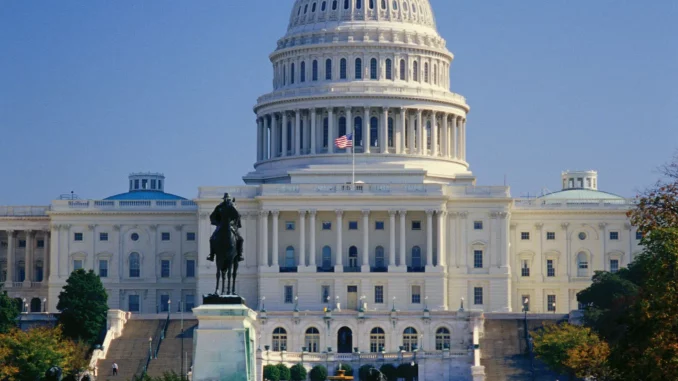
The Protect College Sports Act of 2026 is being described nationally as an NIL bill, or a transfer‑portal bill, or a response to the House settlement, or a legal shield for the NCAA. That’s all true, but it’s incomplete. This bill is bigger than any one of those categories. It is the first serious congressional attempt to build a national rulebook for the revenue‑sharing era — a rulebook that would govern how athletes are paid, how NIL is disclosed, how transfers work, how agents operate, how conferences sell media rights, and how much authority the NCAA and conferences regain after years of losing ground in court.
For LSU fans, this bill matters on two fronts. First, it would reshape the national marketplace LSU competes in. Second, it intersects directly with Louisiana’s own HB 608 — a bill awaiting Gov. Jeff Landry’s signature that would shield key revenue‑sharing information from public disclosure. The federal bill and the Louisiana bill are on a collision course, and LSU sits right in the middle.
This deserves more than a headline. It deserves clarity.
Why Congress Is In This at All
College sports has outgrown the NCAA’s old amateurism model. NIL opened the door, but the real story is what came after: a system governed by state laws, court rulings, NCAA memos, conference rules, booster collectives, third‑party deals, and settlements. No one is in charge. Everyone is improvising. And every time the NCAA tries to impose a national rule, the next question is whether that rule violates antitrust law.
Schools want rules, but they want flexibility. Athletes want compensation, but they want protections. Conferences want stability, but the richest conferences want to preserve their leverage. Lawmakers want to protect Olympic sports and women’s sports, but they disagree on how far Congress should go in regulating the marketplace.
Into that vacuum comes the Protect College Sports Act. Its answer to the question “Who governs college sports now?” is blunt: Congress does.
What the Bill Actually Does
1. It preserves NIL — but it regulates it in ways the current system doesn’t.
Athletes keep the right to earn NIL money. Schools and conferences cannot punish them for it. But the bill adds structure:
- Athletes must disclose NIL deals over $600 to their schools.
This is not public disclosure. The bill protects individual athlete privacy. - A public, searchable NIL database would be created.
The data would be anonymized. The goal is to give athletes and families a real sense of market value without exposing individual deals.
This is the bill’s NIL philosophy in one sentence: preserve NIL, but make fake NIL harder to hide.
2. It extends and federalizes the House revenue‑sharing settlement.
The House settlement opened the door for schools to share revenue directly with athletes under a capped system. The Protect College Sports Act would:
- Extend the revenue‑share cap beyond the settlement
- Allow annual inflation adjustments
- Prohibit schemes designed to evade the cap
This is not Congress rubber‑stamping the settlement. It is Congress locking it in as national law.
The bill also targets the gray zone where NIL and revenue sharing intersect. It would allow athletes to earn money, but it would prevent schools, collectives or associated entities from using NIL as an unlimited payroll system.
3. It gives the NCAA targeted antitrust protection — the most important and controversial part of the bill.
Antitrust law is the reason the NCAA’s old model collapsed. Every time the NCAA tried to impose a national rule, the next lawsuit asked whether that rule illegally restrained the marketplace. Courts repeatedly said yes.
The Protect College Sports Act would change that. It would give the NCAA, conferences and schools a legal safe harbor when enforcing rules created under the federal framework. Those rules include:
- NIL
- Revenue sharing
- Transfers
- Eligibility
- Tampering
- Agent regulation
In plain English, Congress would be telling the courts: if the NCAA is enforcing these federally authorized rules, they should not be treated as illegal under antitrust law.
This is the NCAA’s long‑sought shield. Without it, any national rule — revenue‑share caps, transfer limits, NIL restrictions — could be challenged in court. With it, the NCAA regains something it has been losing for years: enforceable authority.
Critics argue the bill limits athlete earning power without giving athletes collective bargaining rights. Supporters argue that without antitrust protection, the entire system collapses back into litigation.
That is the central bargain: athletes get rights and protections; schools and conferences get a federally protected rulebook.
4. It creates national rules for transfers, eligibility and agents.
The bill would standardize the transfer landscape:
- One penalty‑free transfer
- A second transfer may require sitting out
- Exceptions for coaching changes, discontinued sports, graduate study and certain misconduct situations
Eligibility would be standardized under a five‑year framework, with exceptions for military service, religious missions, pregnancy and other approved absences.
Agents — currently one of the least regulated parts of the system — would face:
- Mandatory registration
- Required contract terms
- A 5% fee cap
- The possibility of decertification or fines
This is Congress stepping into the part of the marketplace that has been operating in the shadows.
5. It adds athlete protections — a political necessity.
To make the bill viable for Democrats and athlete‑rights advocates, it includes significant protections:
- Medical coverage during participation and five years after
- Catastrophic injury coverage
- Second‑opinion coverage
- End‑of‑college physicals
- A medical trust fund
- Health and safety standards for concussions, heat illness, rhabdomyolysis, sickle cell trait, asthma, abuse, hazing and sexual misconduct
- An Office of the Student Athlete Ombudsman
- Athlete representation on governing boards
This is the bill’s political construction: it does not ask Democrats to support a pure NCAA immunity bill. It pairs antitrust protection with athlete protections.
6. It restricts midseason coaching movement.
The so‑called “Lane Kiffin Rule” would prevent coaches from leaving during the competitive season and immediately taking over recruiting, NIL activity or game‑planning at another FBS program.
The goal is stability. The concern is that the coaching carousel now disrupts teams, athletes and rosters before seasons are even finished.
Why the Bill Is Built to Pass
The sponsors — Cruz, Cantwell, Schmitt and Coons — represent a deliberate bipartisan coalition. This is not a messaging bill. It is built around Senate math.
The policy mix is equally deliberate:
- Republicans and administrators get antitrust protection, spending‑cap enforcement, transfer limits and national NIL rules.
- Democrats and athlete advocates get NIL rights, medical protections, scholarship protections, transparency and representation.
- Schools outside the SEC and Big Ten get a check on the growing power of the two richest conferences.
The SEC and Big Ten do not control the U.S. Senate. A bill can anger them and still be viable if it gives enough other senators, leagues and advocacy groups a reason to support it.
Why the SEC and Big Ten Are Wary
The bill includes media‑rights language that could open a path for conferences and schools to pool certain media rights. Supporters argue this could create more revenue, support women’s and Olympic sports, and prevent a two‑conference superstructure dominated by the SEC and Big Ten.
The SEC and Big Ten see it differently.
They already control the most valuable media inventory in college sports. They have spent years building their own television leverage. They do not want a federal framework or pooled‑rights model interfering with their ability to negotiate directly with media partners.
From their perspective: why would the richest conferences hand control of their product to a broader national system?
This is the bill’s biggest political fight.
What This Means Nationally
Nationally, the bill attempts to trade:
- Chaos for structure
- Litigation risk for congressional protection
- Unlimited NIL for regulated NIL
- Unlimited transfers for standardized transfers
- Conference autonomy for federal guardrails
It is the first attempt to define what the revenue‑sharing era will look like.
Whether the bargain is fair depends on where you sit. A star football player may see a cap on earning power. A women’s sport athlete may see a lifeline. A school president may see stability. An agent may see regulation. The SEC and Big Ten may see restraint. The ACC and Big 12 may see survival. The NCAA may see its last chance to regain authority.
What It Means for LSU
This is where the bill intersects directly with Louisiana.
1. The bill requires sport‑by‑sport reporting.
The bill requires Division I institutions to report anonymized NIL data and athletic‑department financial information “disaggregated by intercollegiate sports program.” Men’s and women’s teams are treated as distinct programs.
This matters because Louisiana’s HB 608 — passed and awaiting Gov. Jeff Landry’s signature — creates a new public‑records shield for documents tied to revenue‑sharing programs. It is designed to keep key revenue‑sharing information confidential, including how much money is allocated to specific sports.
LSU’s competitive interest in secrecy is obvious. But LSU is not a private franchise. It is a public university. When LSU begins direct revenue sharing, the public has a legitimate interest in understanding the structure of that system.
The Protect College Sports Act would not automatically override every Louisiana law. But it would create a federal framework that preempts conflicting state laws in covered areas.
HB 608 may become LSU’s state‑law shield. The Protect College Sports Act may become the federal law that tests how strong that shield really is.
2. Privacy is not secrecy.
This is the distinction LSU cannot blur.
- Athlete privacy is legitimate.
- Institutional secrecy is not.
The public does not need to know what any individual quarterback or gymnast earns. But the public does have a legitimate interest in sport‑by‑sport allocation — especially at a public university.
The bill protects individual athlete information while requiring broader institutional reporting.
For LSU, that distinction is significant.
Why LSU Fans Should Care
LSU fans should care because this bill affects:
- The competitive future of the SEC
- The future of athlete compensation
- How LSU allocates money by sport
- What the public can see about LSU’s finances
- The balance of power between the SEC, Big Ten and everyone else
LSU wants to compete like a major SEC power. But LSU is also a public university operating inside a system that now includes direct athlete compensation. That tension is not going away.
The Protect College Sports Act may not pass in its current form. It may be amended. The SEC and Big Ten may force changes. Athlete advocates may push back. Legal experts may object. Agents and collectives may resist. The politics may get ugly.
But the bill is serious. It is bipartisan. It is built around Senate vote‑counting. It gives something to both parties, to schools, to athletes, to conferences outside the SEC and Big Ten. And it challenges the assumption that the richest conferences alone will shape the future.
This bill is not merely asking how athletes should be paid.
It is asking who gets to control college sports in the revenue‑sharing era.
For LSU, the answer will matter on the field, in the athletic department, in the public‑records fight and across the future of the SEC.
Be the first to comment