

By KASE KIEISCHNICK, Tiger Rag Writer
(Editor’s Note: Kase Kieischnick will begin writing for Tiger Rag full time on July 1. He is a recent graduate of Louisiana Tech and a Baton Rouge native who is also working for the Louisiana Radio Network and producing the Tiger Rag Radio show every Tuesday from 6-8 p.m. Contact him at [email protected]. In his first assignment for Tiger Rag, he decided to ask, “What if LSU had to find its best starting XI for the World Cup from all its athletes from all time, excluding soccer players?”)
The U.S. Men’s National Team finished third in the first ever FIFA (International Federation of Association Football) World Cup in 1930. But since that first appearance, the Stars and Stripes have failed to advance past the quarterfinals, missing half of the 22 following tournaments altogether, though they are expected to reach the quarters this summer.
American athletes are among the world’s best in most sports. While the national women’s soccer team has earned four World Cup titles and five Olympic golds, the men have struggled to contend on the global stage.
Many fans come to the same conclusion: America’s best athletes play sports other than soccer. But what if they didn’t? What if the greatest athletes to come through one of the most prolific brands in college athletics took their talents to soccer?
For the purposes of this exercise, LSU soccer athletes will not be considered. Players were chosen based on their body-type, athleticism, mentality and success while at LSU in other sports and how those attributes translate to the pitch.
The formation chosen was a base 4-3-3, a simple, attack-focused scheme to maximize the Tigers’ trademark athleticism.
Goalkeeper: Center Shaquille O’Neal
The 7-foot-1, 294-pound O’Neal boasts a 7-foot-7 wingspan that would take up over a third of the goal. Combine that with the explosiveness of a 36-inch vertical, and opponents would stand about as good a chance against him as a P-MAC backboard. He averaged 4.6 blocks a game at LSU, was a two-time SEC Player of the Year and the 1990-1991 Player of the Year.
Center Backs: Center Sylvia Fowles and Defensive Tackle Glenn Dorsey
Two of the most decorated defenders in LSU history, Fowles and Dorsey offer a combination of height and physicality. The 6-6, 217-pound Fowles was the SEC Player of the Year and SEC and National Defensive Player of the Year her senior season in 2007-08.
Dorsey was a 6-2, 230-pound game wrecker named the 2007 SEC and national Defensive Player of the Year. Fowles’ height and defensive versatility will deny any potential aerial threats, while Dorsey’s imposing physicality would deter any would-be attackers from challenging the heart of the defense.
Full Backs: Cornerbacks Patrick Peterson and Tyrann Mathieu
The edges of the back line require elite speed, agility and defensive coverage. Peterson and Mathieu have the coverage instincts, play making ability and recovery speed to fill the role perfectly. A three-year starter and 2010 Bednarik and Thorpe Award winner, Peterson would blanket attackers with experience and pedigree. Mathieu’s ball-hawking instincts and electric playmaking ability would turn defense to offense.
Center Defensive Midfielder: Shortstop Steven Milam
The center defensive midfielder is the engine of the team, a savvy defender and decisive playmaker. There will certainly be questions regarding Milam’s 5-8 frame. That was the same critique Milam silenced when he became the best defensive shortstop in college baseball and led the Tigers to their eighth College World Series title in 2025. In 189 games, Milam has recorded just 14 errors in 674 total chances. The ball does not get past him.
Center Midfielders: Point Guard Pete Maravich and Quarterback Jayden Daniels
The midfield requires elite spatial awareness, anticipation and decision making. Who better than to command the attack than college basketball’s all-time leading scorer and a Heisman Trophy quarterback?
PETE MARAVICH’S SCORING RECORD SURVIVES ANTOINE DAVIS BY 4 POINTS
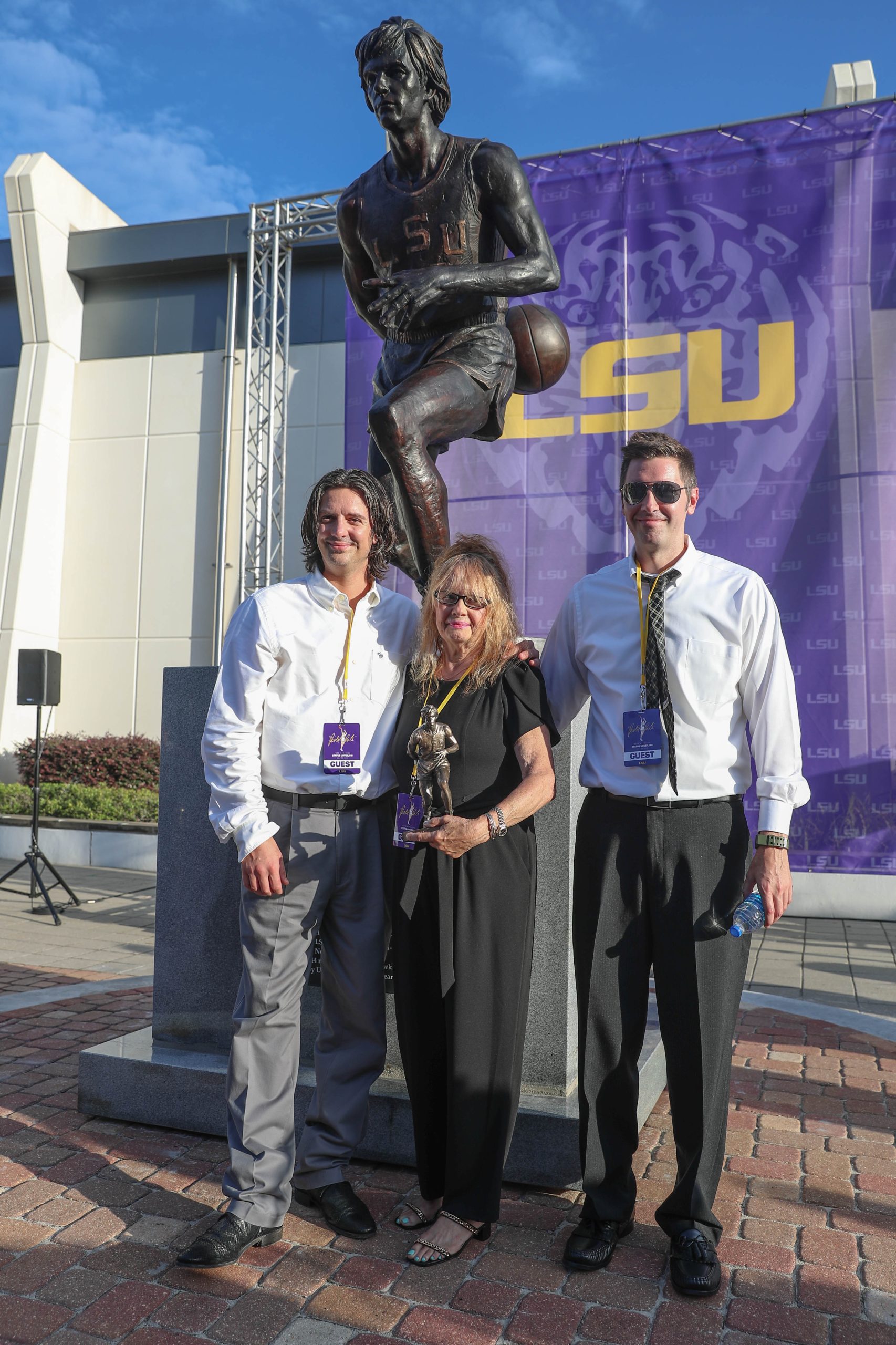
Maravich, who would have turned 79 on this Monday, June 22, was the greatest scorer in college basketball history and one of the greatest scorers and most creative playmakers in the history of the game. He averaged over 44 points and five assists a game at LSU with an astonishing handle and mystical vision.
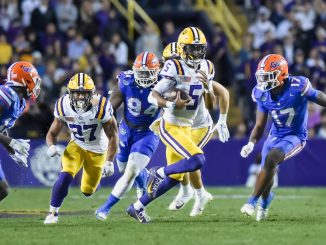
Daniels offers pinpoint passing accuracy and explosive quickness needed on the pitch. The 6-4 signal caller threw just seven interceptions and completed over 70% of his passes at LSU and was clocked running 21.8 mph in a game.
Wingers: Sprinter Sha’Carri Richardson and Running Back Billy Cannon
Speed is the name of the game on the outside of the attack. Richardson’s 10.75-second 100 meter time is an NCAA record, and that instant acceleration and straight line speed will help open up space for the offense.
Cannon reportedly clocked a 9.4 to 9.5 second 100-yard dash, and with his 6-1, 200-pound frame, he can navigate traffic and muscle through defenders like he did on his iconic, 89-yard punt return on Oct. 31, 1959 – The Halloween Run – to beat Ole Miss.
Striker: Guard Seimone Augustus
Augustus was a pure scorer, exactly what the Tigers need leading the front line. The shifty guard could slice her way to the rim or create space in the mid-range. She averaged 19 points per game on 54.4 percent shooting and led LSU to three consecutive Final Fours (2004-06) as a two-time National Player of the Year (2005-06).
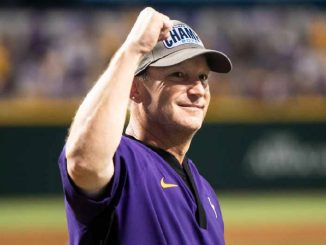
These all-time Tigers are led by the winningest coach in LSU history, Skip Bertman, whose impact on the game is still felt 26 years after he coached his last College World Series game.
Great column here by @tomshatelOWH on Skip Bertman’s touch still all Over Omaha 26 years after he last coached a College World Series game, which he won for the 2000 NC.https://t.co/Uts5rC8sQJ
— Glenn Guilbeau (@SportBeatTweet) June 22, 2026
Bertman coached 41 players from LSU to the Big Leagues and won five national championships from 1991-2000, so he should have no issue managing this star-studded lineup. More importantly, he transformed the LSU baseball program into a national powerhouse from very little and laid the foundation for the sustained success still enjoyed today.
Be the first to comment