
Todd Horne News Analysis
SEC Accuses LSU of Engineering NFL-Player Lawsuits. Its Proof Is a News Story.
Hundreds of athletes with no LSU connection are pursuing eligibility in more than 60 lawsuits nationwide. Yet the conference is treating one school as the architect of the crisis.
The Southeastern Conference is preparing for a Thursday meeting at which its presidents and chancellors will decide whether LSU should remain a member of the league.
At the same time, the SEC is asking a federal judge in Alabama to prevent LSU officials, Louisiana Attorney General Liz Murrill and anyone working with them from interfering with that meeting or with the conference’s claimed First Amendment right to expel one of its members.
Those are extraordinary measures. They demand extraordinary scrutiny of what the SEC is alleging—and what it has actually placed before the court to support it.
The conference’s federal complaint does not accuse LSU merely of recruiting former professional football players after a Louisiana judge opened a path for them to return to college. It makes a much more serious allegation.
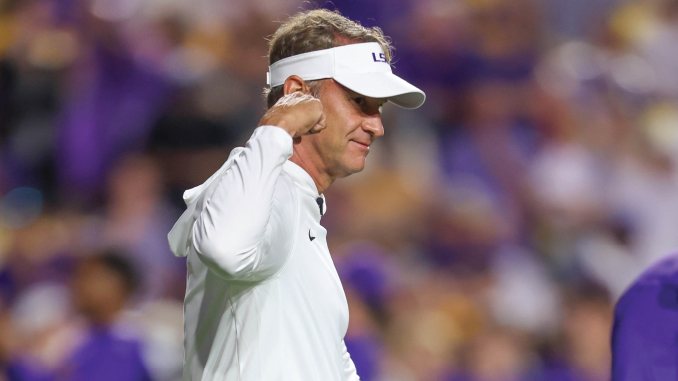
The SEC says LSU and head football coach Lane Kiffin helped engineer the controversy from the beginning.
According to the complaint, LSU and Kiffin conducted what the SEC calls an “orchestrated campaign” and a “deliberate and coordinated campaign” to bring players back from NFL training camps. More specifically, the SEC alleges LSU contacted NFL players or their representatives for the purpose of getting those players to sue the NCAA and then return to college football.
If true, that would mean LSU did not simply respond aggressively to a new legal opportunity. It would mean LSU helped create the specific legal opportunity it later intended to use.
LSU did not create the national crisis
The NCAA says approximately 450 athletes are now pursuing additional eligibility through litigation. About 300 of them have received at least temporary relief allowing them to compete.
Those athletes are spread across dozens of schools, multiple sports and more than 60 lawsuits. The overwhelming majority have no connection to LSU, Kiffin or Louisiana.
They did not all receive telephone calls from LSU. They did not all retain the same lawyers. They did not all file in Baton Rouge. They are challenging NCAA eligibility decisions in state and federal courts throughout the country.
Only a small number of the hundreds of athletes seeking relief had signed NFL contracts before asking to return to college. Dae’Quan Wright, Zxavian Harris and former Tampa Bay Buccaneers edge rusher Jack Pyburn became the most visible examples because of their connection to LSU and Kiffin. But the underlying legal upheaval is much broader than three football players.
It principally involves members of the 2022 high school class who exhausted four seasons of competition before the NCAA adopted its new five-seasons-in-five-years eligibility model. Their argument is that the NCAA changed the opportunity for younger athletes while denying comparable treatment to the class immediately preceding them.
The SEC’s own complaint acknowledges this chronology.
It says the NCAA adopted its new eligibility model in June. It then says members of the 2022 class “began filing lawsuits across the country.” Only after acknowledging that national wave does the complaint allege LSU saw an opportunity to exploit and began recruiting former professional players.
The SEC does not—and realistically cannot—claim LSU created the national eligibility crisis.
Its narrower allegation is that LSU recognized the existing movement, contacted a few players in NFL camps and encouraged them to use litigation to join LSU.
That remains a serious allegation. It is also an allegation for which the SEC’s publicly filed proof is exceedingly thin.
What the SEC actually cites
The accusation appears most clearly in Paragraph 48(c) of the SEC’s original federal complaint. There, the conference says CBS Sports reported that LSU and Kiffin “reached out to multiple players on NFL rosters or their representation” with the purpose of getting them to pursue litigation that could permit them to return to college.
The SEC’s source for that assertion is an August 25 CBS Sports story written by John Talty and Chris Hummer . Their report, citing unnamed sources, said LSU contacted NFL players or their representatives in an effort to have them challenge the NCAA in court.
That may be excellent reporting. Anonymous sourcing is sometimes necessary, particularly when people with direct knowledge face professional consequences for speaking publicly. Tiger Rag uses unnamed sources when the information is important, independently verified and unavailable through attributable channels.
But a news report and proof filed in federal court are not the same thing.
What the SEC’s filing does not provide
- An email or text message from Kiffin or another LSU employee
- A named player, agent or lawyer who says LSU requested a lawsuit
- Phone records, financial arrangements or sworn declarations
- Internal LSU communications describing a coordinated litigation strategy
- Evidence LSU selected the Baton Rouge venue, retained the lawyers or controlled the case
The complaint does not say who at LSU allegedly contacted which player, when the contact occurred, what was said or who authorized it.
The exhibits attached to the original complaint are the SEC’s governing documents and its professionalism policy. Those materials may establish what rules LSU agreed to follow. They do not establish that LSU organized or financed litigation against those rules.
The SEC alleges a coordinated institutional campaign while largely grouping LSU President Wade Rousse, athletic director Verge Ausberry and Kiffin together as “Defendants.” Yet the complaint identifies no specific action by Rousse or Ausberry showing that either man helped initiate the players’ lawsuit.
That is not proof of an orchestrated institutional campaign. At this stage, it is an accusation resting on a published report.
What Kiffin’s words prove—and what they do not
The SEC also cites several public statements by Kiffin.
During his August 24 news conference, Kiffin acknowledged that LSU was recruiting players attempting to return from NFL camps. He said those players were available and would either play for LSU or somewhere else.
The complaint also quotes Kiffin’s August 25 appearance on The Pat McAfee Show, during which he described the first player to commit as potentially becoming the “poster child” for the issue. Kiffin said other schools were offering the player significant money and that LSU had decided to pursue him.
On August 31, Kiffin said he had consulted LSU’s player leadership committee about adding the former professional players. According to Kiffin, the players unanimously told him to bring them in if they could help LSU win.
Those statements are useful evidence of LSU’s recruiting decision. Kiffin has never seriously disputed that LSU wanted Wright, Harris and other players who had been through NFL camps. He explained his reasoning publicly and made no apology for attempting to improve his roster within whatever rules the courts ultimately allowed.
But none of those statements proves LSU initiated the Louisiana lawsuit.
The timeline exposes the problem. The athletes filed their case in Baton Rouge on August 19. The Kiffin statements cited by the SEC came on August 24, August 25 and August 31.
They came after the lawsuit had already been filed.
Kiffin’s later acknowledgement that LSU was recruiting the players may prove LSU intended to benefit from the litigation. It does not prove LSU conceived, arranged or directed it.
The CBS Sports report contains additional circumstantial material. Cleveland Browns coach Todd Monken said Kiffin had attempted to call him during training camp. But Monken said he did not return the call. That establishes an attempted telephone conversation—not its purpose, content or connection to a lawsuit.
CBS Sports also reported, through sources, that the Louisiana case was not brought in Baton Rouge accidentally. Perhaps it was not. Several plaintiffs had obvious Louisiana connections, and Louisiana provided a strategically favorable venue. That still does not prove LSU selected the court, retained the lawyers or directed the players to sue.
And even if LSU encouraged three former NFL players to join the Louisiana action, that would not make LSU responsible for the approximately 450 athletes challenging eligibility decisions throughout the country.
The national legal breakdown was already underway. LSU may have attempted to use it. That is different from creating it.
An allegation is not a finding
The SEC is entitled to make factual allegations in a complaint before discovery begins. A plaintiff ordinarily does not have to prove its entire case at the pleading stage, and the lawyers signing the complaint assume professional obligations concerning the factual basis for what they allege.
But the SEC is no longer requesting only the ordinary progression of a lawsuit.
It is seeking emergency judicial protection. It has scheduled a meeting to decide whether LSU’s membership should be terminated. It is invoking the constitutional power of expressive association and asking a federal court to prevent Louisiana officials from obstructing the conference’s response.
The consequence under consideration is not a reprimand, a fine or the suspension of a coach.
It is the expulsion of LSU from a conference it helped build and has belonged to since 1933.
When the contemplated consequence becomes that severe, the difference between an allegation and evidence becomes impossible to ignore.
The SEC may possess evidence it has not yet made public. Discovery could uncover messages, calls or agreements proving LSU actively encouraged players to sue. A player, representative or lawyer could eventually testify that LSU initiated the strategy.
If that evidence exists, the SEC should produce it.
As the public record stands now, however, the conference has not done so. Its complaint uses Kiffin’s public candor to prove LSU recruited the players, then leans on one anonymously sourced news report to make the much larger leap that LSU helped initiate their litigation.
Those are two different propositions.
They become even more distinct when the entire national picture is restored. Hundreds of non-LSU athletes were already challenging the NCAA. More than 60 lawsuits were already testing the organization’s eligibility decisions. Courts in multiple jurisdictions—not LSU—created the legal openings that schools and players began examining.
LSU did not place Wright or Harris on its roster for Saturday’s 51-10 victory over Clemson. It left two roster positions open but deferred to the SEC while the courts continued sorting out the dispute. Despite that restraint, the conference has escalated the confrontation from threatened sanctions to a formal meeting over LSU’s membership.
That reveals what this fight has become.
It is no longer principally about whether two football players will take snaps for LSU. It is about whether the SEC possesses authority that a Louisiana court cannot restrain—and whether LSU deliberately created a legal confrontation designed to break that authority.
The SEC has alleged that LSU helped create one part of it.
The record shows LSU could not possibly have created all of it.
And the SEC has not yet proved even the narrower accusation.
Be the first to comment