
Tiger Rag News Services
The lawsuit challenging the Louisiana State University Economic Development District is not simply about whether LSU should build a new arena.
Attorney William Most says it is about something older, simpler and more fundamental: whether government can create a tax structure that raises public money without meaningful voter approval.
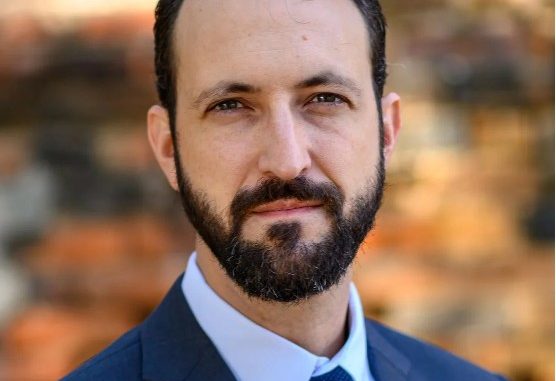
Most, who represents plaintiff Darrell Glasper Sr. in the lawsuit against the LSU EDD and LSU EDD Athletic Subdistrict, joined Tiger Rag Radio this week to explain the case, the tax structure, and why the dispute could matter well beyond LSU’s proposed arena project.
“This is a lawsuit that’s about a principle that’s as old as the United States, which is no taxation without representation,” Most said.
The lawsuit challenges whether the LSU-linked tax districts were legally created and whether taxes tied to the districts can be collected and used without the voter approval normally required for tax increases.
The case also raises questions about the proposed LSU arena, the role of tax revenue in supporting the project, and whether the public was fully informed about how the money would be used.
Tiger Rag has previously reported that Glasper’s lawsuit alleges the LSU EDD was designed to include taxable businesses while excluding voters. The lawsuit claims that structure allowed new taxes to be imposed without an election because businesses are not voters and the district allegedly had no qualified electors residing inside it.
The LSU EDD board approved a 1% sales tax and 1% hotel occupancy tax beginning Oct. 1, 2025. The LSU EDD Athletic Subdistrict later announced its own intended 1% sales tax and 1% hotel occupancy tax. The phrase “both cents” has become central to the controversy because it refers to the two 1% tax layers — one from the LSU EDD and one from the Athletic Subdistrict.
Most told Tiger Rag Radio the issue is not whether LSU fans want a modern arena. The question is whether the financing structure was created and implemented lawfully.
Tiger Rag executive editor Todd Horne framed the issue during the interview as a distinction between the arena itself and the tax mechanism behind it.
LSU needs a new arena. The public question is whether an Economic Development District tax structure funds it without enough voter consent, transparency or accountability.
Most said Louisiana law includes important protections for taxpayers.
“These are important protections that Louisiana law has put in place,” Most said. “Not to say you can’t raise taxes. But if you do, you have to get the necessary input from the voters. You can’t secretly finalize it to a project without their knowledge.”
The lawsuit alleges that private communications showed the tax revenue was intended to support the proposed arena project while the public was told there was no determined use for the money.
Most said the case has now moved into discovery after LSU and the state Attorney General’s office responded.
“The case is moving,” Most said. “Discovery has gone out. The case is moving forward.”
One of the most important unresolved questions is what happens to tax money already collected if Glasper prevails.
Horne asked Most whether the money would be returned to people or businesses that paid the taxes if the lawsuit succeeds.
“That’s a great question,” Most said. “I’m hopeful that they would do the right thing and return it to the people they collected the taxes from, but I’m not sure if that’s necessarily the remedy. We’d have to see how it goes if we get that far.”
The lawsuit has cited a projected figure of roughly $161 million in sales and hotel tax collections over 30 years. Horne also asked Most about LSU President William Tate’s public statement at the Baton Rouge Press Club that collections could potentially exceed $1 billion over the life of the tax structure.
Most said long-term projections are uncertain, but the legal principle remains the same.
“Whether it’s going to be $161 million or a billion, all I know is it’s a lot of money,” Most said. “And when you’re raising anything in that order of magnitude, you better make sure that you’re doing it in a constitutional and legal way.”
The interview also touched on the Bayou Fountain Economic Development District, a separate Metro Council-created district near the LSU arena footprint. Horne asked whether Most was familiar with the BFEDD and whether it could be connected to broader concerns about the use of economic development districts in Baton Rouge.
Most said he had heard of the Bayou Fountain district but had not yet analyzed its legality.
“I do know that there’s, I think, dozens of economic development districts in the Baton Rouge area,” Most said. “And so this is not a one-off issue. This is a potentially recurring problem.”
The LSU EDD lawsuit has become one of the most important public-finance stories surrounding LSU athletics because it sits at the intersection of sports, taxes, economic development, public records, local government and private development.
The cleanest framing is not that the lawsuit seeks to stop LSU’s arena.
The stronger and more accurate framing is that the lawsuit challenges the tax districts and alleges arena-related tax support was hidden from the public.
Most said he expects the courts to address important questions about voter approval, public money and the legal limits of economic development districts.
“These are important issues,” Most said.
The full William Most interview is available in today’s Tiger Rag Radio audio segment embedded above.



Be the first to comment