By KACE KIESCHNICK, Tiger Rag Staff Reporter
The Southeastern Conference and Big Ten are content to leave the Protect College Sports Act on life support.
The U.S. Senate adjourned for the week on Thursday, and the conferences did not reverse their positions on the bill in time for Majority Leader John Thune to file a motion to introduce the bill. Therefore, there is very little chance of any progress being made before the Senate’s month-long recess begins a week from Friday on Aug. 8.
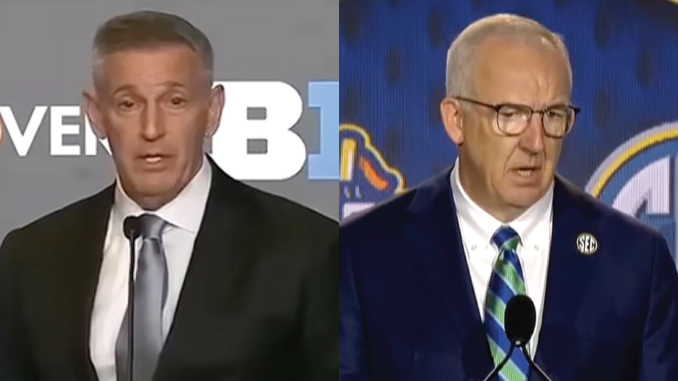
The two power conference commissioners, Tony Petitti of the Big Ten and Greg Sankey of the SEC, missed Thursday’s 9 a.m. deadline just like they missed Wednesday’s 8 a.m. deadline.
Ross Delenger of Yahoo Sports reports that Big Ten university presidents and athletics directors met Thursday afternoon to discuss the final revisions to the Protect College Sports Act, but did not hold a vote to decide whether or not to support it.
SEC, the American Coastal Conference and Big 12 Conference officials held separate meetings on Thursday afternoon.
Delaying a vote on the bill until after the August recess and the start of football season would be a likely death sentence for any passage before next year. Lawmakers have bent over backwards to appeal to the demands of the SEC and Big Ten, but it seems like it will not be enough.
Bill authors added a $22.5 million retention pool so the wealthiest programs can protect their best players from being poached. They made the pooling of media rights completely voluntary so the leagues could protect their biggest asset. They even extended the anti-Super League provision to apply to all Power Four conferences while also allowing those conferences to expand more than initially intended.
Now, school and conference officials seemingly keep moving the bar. There are concerns the language is not strong enough to close a loophole that would allow schools to circumvent the revenue-share cap limit with third party Name, Image & Likeness deals.
Senator Ted Cruz (Republican, Texas), one of the act’s authors, insists that Congress should not limit the earning potential of student-athletes in legitimate commercial sponsorships and endorsements outside of institution-related funding.
It is a perfect analogy for how college athletics got to this point in the first place. The biggest entities keep taking more, and if they run into someone who tells them no, they use their leverage, influence and economic might to find someone who will tell them yes.
Competitive regulations, NIL guardrails, conference expansion, revenue sharing, media deals, it doesn’t matter. The SEC and Big Ten get what they want, or do not accept what they do not want.
And it looks like they do not want the Protect College Sports Act.
And college athletics will remain unprotected for now with few guardrails.
Be the first to comment