
By PIPER HUTCHINSON, Tiger Rag/Louisiana Illuminator
After years of minimal profits, LSU athletics is now tens of millions of dollars in the red.
LSU President Wade Rousse told the state Board of Regents this week the school’s sports program is projected to carry a $26 million deficit this year.
The program’s shortfall for fiscal year 2025-26 was $44 million, according to LSU spokeswoman Meg Sunstrom. It was the first year in which NCAA Division I programs were allowed to directly compensate student-athletes for their name, image and likeness. Like most Power Four conference schools, LSU spent the maximum amount allowed — $21. 5 million — accounting for the biggest portion of the deficit.
Tiger Rag Magazine has been reporting on LSU’s bleeding budgets since February.
LSU athletics has overspent its budget over the past six years by a total of $177.5 million, Rousse told the Regents at their annual budget hearing for all schools under their purview. The $44 million shortfall was covered by the Tiger Athletic Foundation, Sunstrom said.
Near the end of 2025, LSU went on a spending spree to say the least as it fired LSU football coach Brian Kelly on Oct. 26 with six years left on his 10-year contract estimated at $100 million. That left LSU with a $54 million buyout owed to Kelly unless he can get a significant head coaching job in football as the buyout would be reduced by his salary.
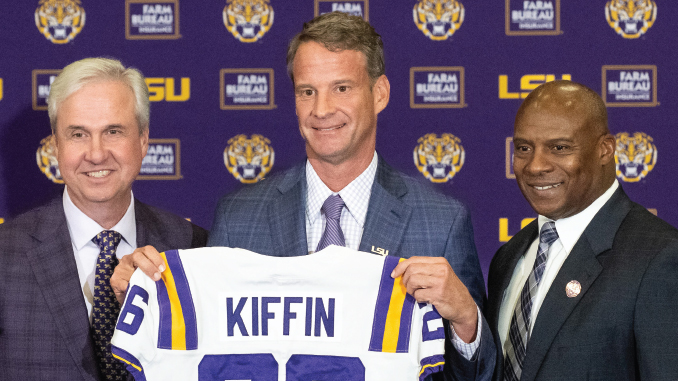
Then LSU hired Ole Miss football coach Lane Kiffin at $91 million over seven years to replace Kelly.
It’s over. Lane Kiffin is LSU’s next football coach. Press conference introducing him set for Monday at LSU.https://t.co/kTRsVE78Of
— Glenn Guilbeau (@SportBeatTweet) November 30, 2025
Kiffin also was able to completely revamp LSU’s roster at a cost estimated at over $40 million. The No. 10 Tigers (2-1, 0-1 SEC) will try to bounce back from a 32-24 loss at Ole Miss – now 3-0 and 1-0 and ranked No. 4 – as Kiffin’s return was not triumphant.
In March of 2026, the coach shopping continued as LSU fired men’s basketball coach Matt McMahon with three years left on a seven-year contract, and he is collecting an $8 million buyout. LSU hired Will Wade, whom it fired in March of 2022 because of numerous NCAA recruiting violations, to a seven-year deal worth $30 million.
Rousse said the university would soon publicly announce details of a new revenue generation plan discussed with dozens of donors in July at a private event at the Governor’s Mansion. Following that gathering, reports circulated that the plan includes a private equity deal linked to media rights for LSU sports. It would most likely involve getting upfront cash from investors who would share profits from an entity that receives income from broadcast deals or other business arrangements.
An announcement on the plan is on hold pending a valuation of LSU’s brand, Rousse said.
“We want to make sure that our brand is valued the right way,” said Rousse, who has not been LSU’s president for a year. “At no point do we ever lose control of anything there.”
The plan would also provide funding throughout the LSU system, which has campuses in New Orleans, Shreveport, Alexandria and Eunice.
“The acute need is certainly athletics, so we’ve got to stop that bleeding first,” Rousse said in an interview. “But you know, I think what we’re building is scalable. And if we do it the right way, it could have a positive effect on revenue for the entire system.”
At the same time LSU is increasing its athletics spending, it’s also trying to boost investment in its academic research in a quest to rank as one of the top 50 research universities.
To do so, Chancellor Jim Dalton said the university needs to boost its federal funding by about $150 million and hire 100 to 150 faculty over the next five years. Dalton leads LSU’s main campus in Baton Rouge and its research-intensive campuses, which include its medical schools in Shreveport and New Orleans, the Pennington Biomedical Research Center and LSU AgCenter.
For the first year, LSU is requesting $31.7 million from the state legislature to hire 45 faculty members and provide them with startup packages to build out their research programs.
LSU is also seeking $21 million from the state to offer competitive stipends for graduate students.
Lawmakers will consider the request in their next legislative session, which begins in April.
(Tiger Rag editor Glenn Guilbeau contributed to this report.)



Be the first to comment