
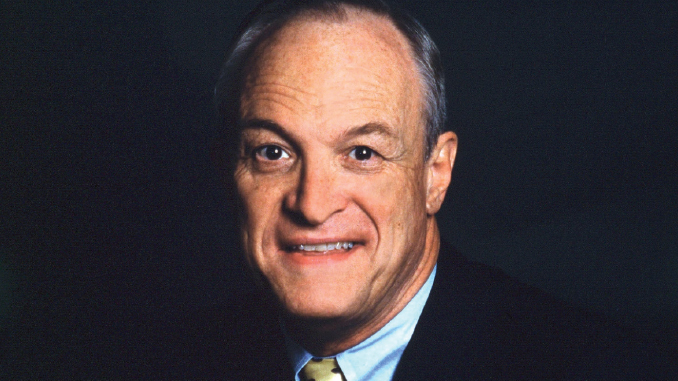
Dale Brown was a passionate, fiercely competitive coach who elevated LSU basketball to unprecedented heights and inspired generations of fans along the way.
But his life was defined by something far greater than basketball: his extraordinary capacity to give.
He gave his time, his energy, and his love. He lifted spirits, filled others with hope, and taught countless lessons – not only through his words, but also through the way he lived.
Brown was a leader and a motivator. He cared more about building into the lives of others than about building up himself.
His explanation was simple: “I love life. I love people. And I want to try to make a difference.”
One writer called Brown a living, breathing state park: He gave so much to so many people for so long that everyone felt like they owned a piece of him.
He was also called Daddy Dale – usually by his players but also by others.
Unfortunately, Daddy Dale will give no more. Brown passed away on October 23, 2026 – at age 90 – in his adopted hometown of Baton Rouge, Louisiana.
Dale Duward Brown was born on October 31, 1935, in Minot, North Dakota. His father had abandoned his family soon before Dale was born. His mother, Agnes Brown, then raised Dale by herself. They lived with limited means in a one-room apartment located above a bar and a hardware store.
Agnes Brown had gone to school only through eighth grade. She was a welfare mom who worked long hours cleaning homes. Young Dale watched her endure mistreatment and injustice from their landlord and others. Those painful experiences created in him a lifelong desire to fight for anyone who was forgotten, vulnerable, or alone.
Brown was always clear about why material things meant little to him and love meant so much. It was because of his mother’s selfless love. That clarity set him on the path to success – and success was important primarily because he could use it to serve others.
Sports eventually gave him a platform. And he constantly used it to serve others.
Brown won 448 games in 25 years as head coach of the LSU Tigers. He led two teams to the Final Four (1981 and 1986) and won four SEC championships. He was named National Coach of the Year in 1981 and was ultimately inducted into the National Collegiate Basketball Hall of Fame.
Vitally important to Brown, he also played a crucial role in racially integrating the LSU basketball program. Everywhere he went, he championed equal opportunity for all and helped break down racial barriers. He believed every person deserved dignity, respect, and a fair opportunity to succeed.
That same commitment to helping others was seen in the way he chose to use two of the biggest regular-season games of his career to benefit causes that needed help. The games – against Notre Dame and North Carolina – drew record-breaking crowds to the Louisiana Superdome and were nationally televised. Brown arranged for one of the games to benefit programs for the homeless and the other – called “Dribblin’ for Donors” – to support organ donation.
Brown would help anyone who needed a lift. He never looked past anyone. He made time for everyone.
As he sometimes said and often wrote when signing an autograph: “God doesn’t make any junk.”
Brown was never really good at accepting praise for his good works, though. He had another favorite old line he employed to push back: “Flattery is like perfume. Taking a sniff is okay, but you better not swallow.”
Clearly, Brown enjoyed words. He maintained a voluminous collection of favorite quotes and poems. He loved reading and writing. He loved talking. He was a popular motivational speaker and wrote multiple books.
Brown loved communicating, period. On his desk, he kept a three-ring binder containing all his contact information. This was not a thin binder. Brown constantly updated it and never stopped using it.
Phone calls were like air and water to Brown – life-sustaining. Same with emails.
Other than family, the most important entries in that binder were the hundreds of former players he had coached. Then again, his players were family.
In that binder, it made no difference whether you were Shaquille O’Neal or a walk-on. If you played for Brown, you were one of his guys, and that meant for life.
Brown’s athletic career began at St. Leo’s Catholic School in Minot, where he starred in multiple sports. He then earned 12 varsity letters – in basketball, football, and track – at Minot State Teachers College and later received a Master’s degree from the University of Oregon.
It was at Minot State that Brown met the love of his life, Vonnie Ness, with whom he would share 67 years of marriage. Vonnie taught at LSU and was recognized as a highly respected authority on international folk dancing.
Brown had several high school coaching jobs in North Dakota and California before joining the college ranks. He was an assistant coach at Utah State and Washington State before accepting the LSU job – his first and only position as a collegiate head coach.
Brown did not only win games at LSU – building a wildly popular basketball program at a football school. He also became known nationally for his support of student-athletes and his opposition to NCAA amateurism rules that he said legislated against human dignity.
As always, he saw himself as a champion of underdogs. And his never-ending fight against the NCAA – his refusal to ever be silenced – eventually made a difference in shifting public opinion and allowing rules changes to be enacted.
Brown did not only talk about helping students. He also established the non-profit Dale Brown Foundation to help them – athletes or not – with academic scholarships.
When he retired from coaching, Brown continued helping students through the foundation. He also supported Native American communities, flood victims in North Dakota, and numerous organizations throughout Louisiana.
His generosity was also directed toward personally helping individuals he encountered anywhere he went.
Brown received countless awards and accolades, but no honor was more meaningful than being named the 2027 recipient of the prestigious John R. Wooden Legends of Coaching Award. This happened just days before his passing. It was particularly fitting because Wooden was Brown’s idol and mentor – and because the award is not only about coaching. It also recognizes integrity, character, and leadership.
Brown was the most loving and most loved man anyone in his family ever knew.
He always put others first. He always led with the heart. He was always a great humanitarian before anything else.
Brown long ago fell in love with Louisiana. And the people of Louisiana loved him right back. That legacy of love will continue to impact folks from all walks of life for a long time to come.
Brown was preceded in death by his sisters Lorraine Ahmann (2012) and Eleanor Haider (2015).
He was a devoted husband, father, grandfather, and great-grandfather. Survivors include his wife, Vonnie Ness Brown; their daughter, Robyn Brown Prudhomme, and her husband, Chris; their three sons, Christopher, Peyton, and Cameron Prudhomme; Christopher’s wife, Anna; and Christopher and Anna’s two children, Grace and James.
A Funeral Mass – open to the public – will be held at 10 a.m. on Wednesday, November 11, 2026, at St. George Catholic Church, 7880 St. George Drive in Baton Rouge.
Also: LSU and the family of Dale Brown will on the same day host a Celebration of Life Ceremony to honor him. It will begin at 6 p.m. at the Pete Maravich Assembly Center on the LSU campus and will be free and open to the public.
May the example of Dale Brown continue to inspire us through three simple words: Love Like Dale.
Be the first to comment