
By KACE KIESCHNICK, Tiger Rag Staf Reporter
And the Protect College Sports Act saga continues.
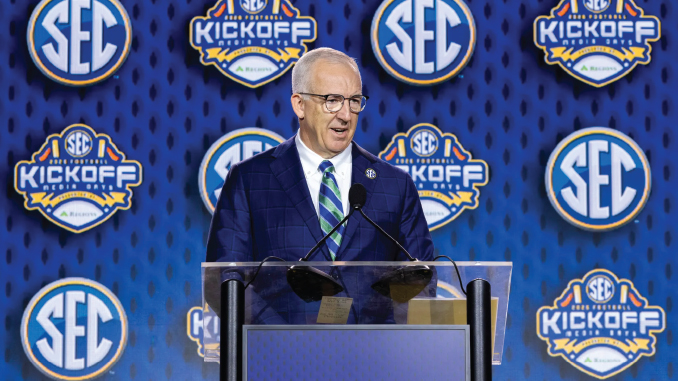
Southeastern Conference commissioner Greg Sankey and Big Ten commissioner Tony Petitti did not meet the 8 a.m. Wednesday deadline that lawmakers set for them to change their positions on the Protect College Sports Act, but will meet again later today.
Lawmakers completed final revisions on the bill after extensive discussions with school and conference officials and sent that revised copy to the SEC and Big 10 on Tuesday. They told the conferences they had until 8 a.m. central time Wednesday to announce their positions on the bill.
The leagues, however, instead skipped that and instead scheduled meetings with university presidents for this afternoon. Whatever stance they decide to take will likely determine the future of the Protect College Sports Act or delay it with the future of college athletics with or without guardrails hanging in the balance.
If the conferences support the bill, it could advance to the U.S. Senate floor next week for vote. If they oppose it, it could mean delays past the start of football season and the bill’s possible ensuing death.
The Protect College Sports Act is now almost unrecognizable from when it was initially drafted by Senators Ted Cruz (Republican, Texas) and Maria Cantwell (Democrat, Washington). The proposed pooling of media rights has been made completely voluntary for all schools in the new draft.
The previous draft had the lucrative media rights of the SEC and Big Ten pooled throughout all the other conferences, and was the main issue Sankey and Petitti had with it.
The authors also extended the Super League provision that freezes the membership of the wealthiest conferences to apply to all Power Four leagues. The newest addition and reported current hold up is an additional revenue-share retention pool.
The act allows schools to exceed the revenue-share cap limit by $20 million to retain student athletes. An additional $5 million in women’s Name, Image & Likeness can be credited, but institutions wanted a $25 million pool outright.
Numerous other loopholes have been closed and language has been added to ensure all the regulations affect all schools evenly and are not targeted at the two largest conferences.
The SEC and Big 10 have seemingly gotten all they asked for. They asked for congressional help. They got it. Now it is time for them to decide whether they want it or if they think they can get a better deal next offseason and do it all again.
Be the first to comment